
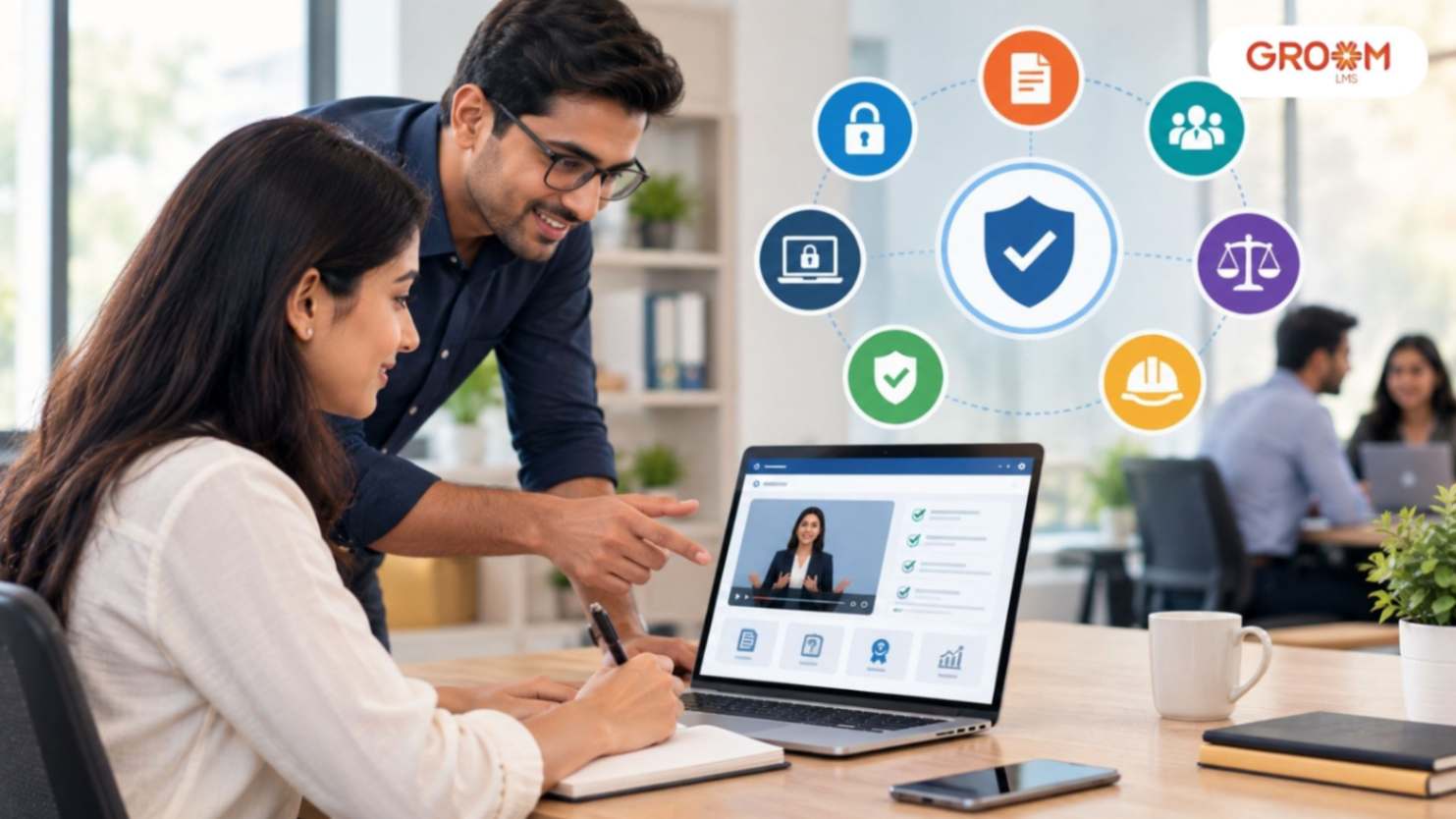
Workplace compliance is an essential part of responsible business operations. Employees need to understand organizational policies, industry requirements, ethical standards, data protection practices, workplace safety procedures, and other responsibilities relevant to their roles. As businesses grow, maintaining consistent compliance awareness across different teams and locations can become increasingly challenging.
Traditional classroom sessions and manual training processes may not provide the flexibility modern organizations require. Employees may work across offices, branches, remote locations, and different time zones. At the same time, compliance requirements can change, making it important for organizations to update learning content and communicate new expectations efficiently.
Workplace compliance digital training provides a scalable way to deliver consistent compliance education through digital learning environments. With platforms such as GroomLMS, businesses can organize compliance courses, assign role-based learning, assess employee knowledge, track completion, and maintain centralized training records.
What Is Workplace Compliance Digital Training?
Workplace compliance digital training refers to the use of online learning technologies to educate employees about laws, regulations, organizational policies, ethical standards, and workplace responsibilities.
Instead of relying exclusively on classroom-based sessions, organizations can provide compliance learning through videos, presentations, interactive modules, assessments, quizzes, scenarios, and virtual instructor-led sessions.
Digital training can cover areas such as:
- Workplace ethics and code of conduct
- Data privacy and information security
- Anti-bribery and anti-corruption
- Workplace harassment prevention
- Cybersecurity awareness
- Financial compliance
- Workplace health and safety
- Regulatory requirements
- Risk management
- Industry-specific compliance
The exact content should be aligned with an organization’s industry, operating environment, employee responsibilities, and applicable requirements.
Why Is Digital Compliance Training Important?
Compliance training is more effective when employees can access relevant information consistently and understand how it applies to their everyday responsibilities.
A digital approach can help organizations create a more structured learning environment while making training easier to distribute across a workforce.
Consistent Learning
A centralized course can provide employees with the same core policies, procedures, and learning objectives across departments and locations.
Flexible Access
Employees can complete assigned courses through supported devices and according to their work schedules, making digital learning useful for hybrid and distributed teams.
Easier Content Updates
Compliance requirements and internal policies may change over time. Digital course content can be updated and redistributed without organizing a new classroom session for every employee group.
Better Training Records
An LMS can maintain records of course completion, assessment results, certifications, and learner activity, helping training teams manage compliance programs more efficiently.
Continuous Awareness
Compliance should not be treated as a once-a-year activity. Digital learning can support refresher courses, periodic assessments, and ongoing awareness initiatives.
“Effective compliance training connects organizational requirements with the everyday decisions employees make at work.”
Common Areas Covered by Workplace Compliance Training
A comprehensive program should reflect the risks and responsibilities associated with the organization.
Data Privacy and Protection
Employees who handle personal or confidential information need to understand appropriate data collection, storage, access, sharing, and disposal practices.
Cybersecurity Awareness
Digital security training can address phishing, password security, suspicious links, unauthorized access, social engineering, and responsible use of company systems.
Workplace Ethics
Employees can learn about conflicts of interest, ethical decision-making, professional conduct, confidentiality, and reporting responsibilities.
Anti-Bribery and Anti-Corruption
Training can help employees understand prohibited practices, potential warning signs, reporting channels, and organizational expectations.
Workplace Harassment Prevention
Organizations can provide learning on respectful workplace behavior, inappropriate conduct, reporting processes, and employee responsibilities.
Financial Compliance
Finance-related learning can cover fraud awareness, financial controls, responsible handling of financial information, and relevant internal procedures.
Health and Safety
Safety training can help employees understand workplace hazards, emergency procedures, reporting requirements, and preventive practices.
Challenges of Traditional Compliance Training
Organizations managing compliance education through conventional methods may face several operational challenges.
Classroom sessions require scheduling employees, trainers, locations, and learning materials. This can become difficult when teams operate across different cities or work schedules.
Manual tracking can create another challenge. HR and compliance teams may need to maintain spreadsheets or separate records to monitor who has completed mandatory training.
Content updates can also be time-consuming. When policies change, organizations may need to communicate the updated information quickly and ensure that employees have completed the revised training.
Digital learning can reduce many of these administrative challenges by bringing content, learners, assessments, and reporting into one environment.
How Workplace Compliance Digital Training Works
First, organizations identify the compliance requirements relevant to their workforce. Learning content is then developed around specific objectives and employee roles.
Courses can be assigned through the LMS according to department, job role, location, or compliance requirement. Employees complete the learning modules and assessments, while managers monitor progress through reports and dashboards.
Refresher learning can then be scheduled to reinforce knowledge and address changes in policies or requirements.
Key Features of Effective Digital Compliance Training
Role-Based Learning
Different employees may have different responsibilities and risk exposure. Role-based learning paths help ensure that employees receive relevant compliance education.
Interactive Content
Videos, scenarios, quizzes, simulations, and practical examples can make compliance topics more engaging than policy documents alone.
Assessments
Quizzes and knowledge checks can help organizations determine whether employees understand key concepts.
Automated Assignments
Training administrators can assign mandatory courses to selected employee groups based on roles or requirements.
Progress Tracking
L&D and compliance teams can monitor course completion, learner progress, assessment performance, and certification status.
Reporting and Analytics
Reports can provide visibility into participation, completion trends, knowledge gaps, and outstanding training requirements.
Certification Management
Digital certificates can provide evidence of course completion where certification is appropriate.
Benefits of Workplace Compliance Digital Training
Improved Employee Awareness
Regular digital learning can help employees understand the policies and practices that apply to their work.
Greater Training Consistency
Centralized courses help organizations deliver standardized compliance information across teams and locations.
Reduced Administrative Work
Automated assignments, reminders, tracking, and reporting can reduce repetitive administrative activities.
Scalable Learning
Organizations can extend training to new employees, departments, branches, and locations without repeatedly organizing classroom sessions.
Better Visibility
Training dashboards can give managers a clearer view of completion and assessment performance.
Flexible Learning
Employees can complete digital modules according to their schedules while still meeting defined training requirements.
Easier Refresher Training
Organizations can schedule periodic learning to reinforce important concepts and maintain awareness.
Best Practices for Digital Compliance Training
Keep Training Relevant
Employees are more likely to engage with compliance learning when examples and scenarios reflect their actual responsibilities.
Use Short, Focused Modules
Breaking complex topics into manageable learning modules can make compliance education easier to consume and revisit.
Include Real-World Scenarios
Scenario-based learning can demonstrate how employees should respond to situations involving ethical, security, safety, or regulatory concerns.
Make Learning Role-Specific
Avoid giving every employee the same learning path when their responsibilities and risks are different.
Test Knowledge
Use assessments and knowledge checks to measure understanding instead of relying only on course completion.
Refresh Content Regularly
Review compliance content when regulations, organizational policies, technology, or business processes change.
Track More Than Completion
Completion rates are useful, but assessment performance and learner behavior can provide deeper insight into training effectiveness.
Role of an LMS in Digital Compliance Training
An LMS provides the infrastructure required to organize and manage workplace compliance learning.
Instead of storing courses, employee records, assessments, and completion data across separate systems, organizations can bring these activities together in one centralized environment.
A modern LMS can support:
- Course management
- Employee enrollment
- Learning paths
- Assessments and quizzes
- SCORM-based learning
- Virtual instructor-led training
- Certifications
- Analytics and dashboards
- Learner tracking
- Automated training assignments
- Training reports
This makes the LMS an important component of a broader compliance learning strategy.
How GroomLMS Supports Workplace Compliance Learning
GroomLMS provides organizations with a structured environment for managing digital employee learning. Its capabilities can support course management, assessments, certifications, learner tracking, analytics, multimedia learning, and standardized e-learning content.
For compliance programs, organizations can create learning paths based on employee roles, assign mandatory courses, monitor completion, and review training data through centralized reporting.
Businesses can also use digital learning for onboarding, cybersecurity awareness, financial compliance, workplace ethics, data privacy, risk management, and other areas where consistent employee education is important.
The objective is not simply to deliver mandatory courses. A structured LMS approach can help organizations make compliance learning more accessible, measurable, and continuous.
Measuring Compliance Training Effectiveness
Organizations should evaluate whether compliance training is improving employee knowledge and supporting business objectives.
Useful metrics include:
- Course completion rates
- Assessment scores
- Knowledge retention
- Certification completion
- Training participation
- Department-level completion
- Learner progress
- Refresher training completion
- Identified knowledge gaps
Organizations can combine these indicators to understand both training participation and learning effectiveness.
Workplace Compliance Training for Different Employee Groups
Not every employee requires identical compliance education.
New Employees: Onboarding can introduce employees to company policies, ethics, cybersecurity, safety, and reporting procedures.
Managers: Management teams may require additional learning around leadership responsibilities, workplace conduct, risk management, and employee reporting.
Finance Teams: Specialized training can address financial controls, fraud prevention, financial data, and relevant compliance procedures.
IT Teams: Cybersecurity, access controls, data protection, and technology-related risks may require greater emphasis.
Customer-Facing Employees: Teams interacting with customers may require training related to privacy, ethical conduct, communication, and industry-specific requirements.
Role-based learning makes compliance education more relevant while helping organizations avoid unnecessary training.
The Future of Digital Workplace Compliance Training
Workplace compliance learning is becoming increasingly connected to technology, data security, automation, and employee experience.
Future programs are likely to focus more on personalized learning paths, scenario-based training, continuous awareness, analytics, mobile accessibility, and AI-assisted learning experiences.
Organizations may also use learning data to identify knowledge gaps and provide targeted refresher training rather than relying solely on annual compliance sessions.
As compliance requirements continue to evolve, businesses will need learning systems that can adapt quickly while maintaining accurate training records.
Conclusion
Workplace compliance digital training provides organizations with a flexible and scalable way to educate employees about policies, regulations, risks, ethics, security, and workplace responsibilities.
By combining relevant content with assessments, role-based learning, automated assignments, tracking, and analytics, organizations can create a more structured compliance learning process.
An LMS can further simplify administration by bringing courses, learners, assessments, certifications, and reporting into one centralized environment. For businesses seeking to strengthen employee awareness while making compliance training easier to manage, digital learning provides a practical foundation for continuous workplace education.
Build a More Compliance-Ready Workforce
Effective compliance starts with informed employees. A structured digital learning strategy can help organizations deliver relevant training, monitor progress, and reinforce important workplace practices.
Explore GroomLMS to create scalable digital compliance programs for onboarding, risk management, data privacy, cybersecurity, workplace ethics, and other training needs.
Contact Us | Join GroomLMS | Chat on WhatsApp
Frequently Asked Questions (FAQs)
What is workplace compliance digital training?
Workplace compliance digital training uses online learning platforms to educate employees about organizational policies, regulations, ethical standards, safety requirements, data protection, cybersecurity, and other workplace responsibilities.
What topics can be included in digital compliance training?
Common topics include data privacy, cybersecurity, workplace ethics, anti-bribery, harassment prevention, financial compliance, risk management, workplace safety, and industry-specific requirements.
How does an LMS support compliance training?
An LMS can help organizations create and assign courses, manage learning paths, conduct assessments, track completion, issue certificates, and generate training reports.
How often should compliance training be conducted?
The frequency depends on organizational requirements, applicable regulations, employee roles, and changes in policies or risks. Initial training can be supplemented with periodic refresher courses.
Can digital compliance training be customized?
Yes. Organizations can develop role-specific learning paths based on departments, responsibilities, locations, risk exposure, and applicable compliance requirements.