Managing employee training across multiple branches, departments, subsidiaries, or business units can become expensive. Many organisations purchase separate LMS licences for different teams. Others maintain independent learning platforms for each location or business division. Although these arrangements offer local control, they often create duplicated costs and administrative complexity.
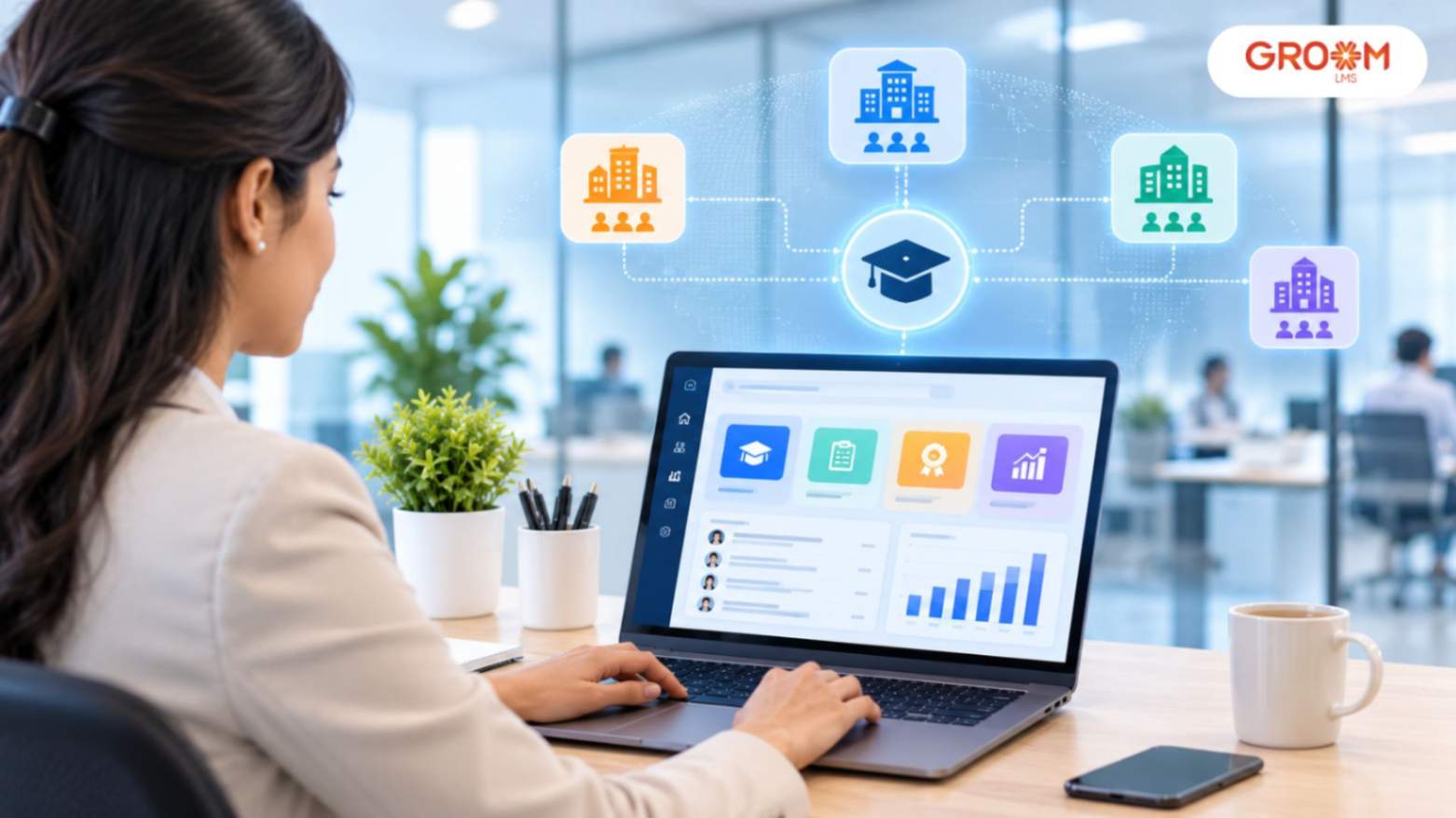
An Enterprise Multi-Tenant LMS in India offers another approach. It allows organisations to manage multiple learning environments through a shared platform infrastructure. Each business unit can maintain its own learners, courses, administrators, and training activities while operating within a centrally managed system.
This structure can reduce unnecessary platform duplication and simplify learning administration. However, savings depend on licensing terms, implementation requirements, infrastructure, and operational needs.
For HR leaders, L&D managers, and enterprise administrators, the important question is straightforward: can one LMS support multiple teams without compromising their independence?
GroomLMS provides a scalable learning environment that organisations can evaluate for managing distributed training programmes. Understanding multi-tenancy, its cost implications, and its practical limitations can help enterprises make better LMS investment decisions.
What Is an Enterprise Multi-Tenant LMS in India?
An Enterprise Multi-Tenant LMS in India is a learning management system that supports multiple organisational groups through shared platform infrastructure.
Each tenant represents a separate learning environment. Depending on the platform, tenants may represent subsidiaries, departments, branches, clients, or business units.
A multi-tenant LMS typically offers:
- Shared platform infrastructure.
- Separate learner groups and administrative access.
- Independent course organisation for different business units.
- Centralised platform management.
- Configurable learning environments.
- Consolidated administration and reporting options.
The exact level of separation depends on the provider’s architecture and configuration.
For example, a manufacturing enterprise may operate across five states. Each regional office needs different training programmes, administrators, and employee groups.
Instead of purchasing five independent LMS licences, the organisation could evaluate a multi-tenant arrangement. Regional teams would manage their learning activities within their assigned environments.
Meanwhile, the central L&D team could maintain oversight across the organisation.
Why Multiple LMS Licences Increase Enterprise Training Costs
Separate LMS licences create more expenses than their subscription prices alone suggest.
1. Duplicated Subscription Expenses
When every department or subsidiary purchases its own LMS, recurring licence costs accumulate.
Organisations may also pay separately for additional users, storage, integrations, or premium features.
A consolidated licensing arrangement may reduce duplicated expenses. However, actual savings depend on the provider’s pricing model and tenant requirements.
2. Repeated Implementation Costs
Each LMS instance may require configuration, onboarding, user setup, and administrative preparation.
When organisations maintain separate platforms, they can repeat these activities unnecessarily.
A shared multi-tenant environment can reduce duplication when common infrastructure and implementation processes support multiple business units.
3. Increased IT and Administration Work
Managing several LMS platforms creates additional responsibilities.
IT teams may handle multiple updates, access configurations, integrations, troubleshooting processes, and vendor relationships.
Training administrators also spend time coordinating information across different systems.
An Enterprise Multi-Tenant LMS in India can simplify these responsibilities through centralised platform management.
4. Fragmented Training Reports
Separate systems often produce separate reports.
Consequently, enterprise leaders may struggle to compare training completion, assessment results, and participation across departments.
Consolidated reporting can improve organisational visibility, provided the LMS supports suitable reporting permissions and data access.
How an Enterprise Multi-Tenant LMS in India Can Save Your Organisation
The financial advantage of multi-tenancy comes from reducing duplication while retaining necessary separation.
However, organisations should evaluate savings across subscriptions, administration, implementation, and operational effort.
Reduce Repeated Platform Expenses
A multi-tenant LMS may allow several business units to share a subscription or platform arrangement.
Instead of maintaining separate infrastructure for every team, organisations can evaluate a consolidated licensing model.
The important consideration is whether the provider charges according to total users, tenants, features, or another pricing structure.
Simplify Platform Administration
Centralised administration can reduce repetitive platform management.
For example, a corporate L&D team may manage platform-level settings while regional administrators manage their own courses and learners.
This arrangement can reduce duplicated administrative work without removing local responsibilities.
Reuse Suitable Training Content
Enterprises often repeat common training across business units.
Examples include:
- Employee onboarding.
- Workplace safety training.
- Information security awareness.
- Code of conduct programmes.
- Leadership development.
A multi-tenant LMS may support controlled content sharing or course distribution, depending on its features.
This can reduce repeated course preparation and improve consistency across locations.
Improve Training Visibility
Enterprise leaders need to understand training participation across departments.
A suitable multi-tenant LMS can provide reporting across learning environments, subject to its reporting capabilities and access permissions.
This helps organisations identify incomplete programmes, compare participation, and plan future training activities.
Multi-Tenant LMS vs Separate LMS Licences: Which Is Better?
The choice depends on how much independence each business unit needs.
| Requirement | Separate LMS licences | Multi-tenant LMS |
|---|---|---|
| Platform management | Independent systems | Shared platform management |
| Administrative structure | Separate administrators | Central and tenant-level administrators |
| Platform costs | Potentially duplicated | Potentially consolidated |
| Training environments | Independent platforms | Separate environments within shared infrastructure |
| Content management | Repeated setup may occur | Content sharing may be supported |
| Reporting | Separate reports | Consolidated reporting may be available |
| Customisation | Independent configurations | Depends on tenant-level flexibility |
Separate LMS platforms may remain appropriate when subsidiaries require completely independent systems, vendors, integrations, or contractual arrangements.
A multi-tenant LMS is worth evaluating when business units need local control but share broader enterprise learning requirements.
The decision should consider security, administration, customisation, and total cost rather than subscription price alone.
What Should Enterprises Check Before Selecting a Multi-Tenant LMS?
Choosing an Enterprise Multi-Tenant LMS in India requires careful evaluation.
Tenant Isolation and Access Permissions
Each business unit should access only the learners, courses, and records it is authorised to manage.
Check how the platform separates tenant data and controls administrative permissions.
Ask providers to explain tenant isolation, access policies, security controls, and data handling practices.
Tenant-Level Customisation
Different departments may require different learning environments.
Evaluate whether tenants can configure course structures, branding, administrator roles, learning programmes, and relevant settings independently.
Centralised Reporting
Enterprise leaders may need consolidated reports, while regional managers require access to their own learning records.
Confirm that reporting supports these requirements without exposing information unnecessarily.
Scalability
The platform should accommodate changes in employee numbers, departments, locations, and training requirements.
Also, examine how pricing changes when the organisation adds tenants or learners.
Support and Technical Requirements
Understand the provider’s responsibilities for platform maintenance, upgrades, support, and troubleshooting.
A manageable LMS should reduce unnecessary technical dependency while offering suitable assistance when problems arise.
How to Calculate the Potential Savings of an Enterprise Multi-Tenant LMS in India
Organisations should compare the total cost of ownership instead of focusing only on licence prices.
A simple evaluation can include:
- Current LMS subscriptions: Add recurring licence costs across departments and subsidiaries.
- Implementation expenses: Include setup, configuration, integrations, and onboarding.
- Administration costs: Estimate the effort required to manage separate platforms.
- Maintenance expenses: Consider support, upgrades, and technical management.
- Proposed multi-tenant costs: Include subscription pricing, tenant charges, implementation, and required integrations.
- Transition expenses: Account for migration, training, and temporary operational disruption.
The difference between current and proposed costs provides an estimated financial comparison.
For example, an enterprise operating several independent LMS platforms may discover that duplicated administration represents a significant operational burden.
A multi-tenant arrangement could reduce that duplication. Nevertheless, organisations should validate provider quotations and implementation requirements before projecting savings.
How GroomLMS Can Support Enterprise Learning Management
GroomLMS provides a scalable and customisable learning environment for organisations managing training programmes.
Enterprises evaluating an Enterprise Multi-Tenant LMS in India can assess GroomLMS against their requirements for course management, learner organisation, assessments, certifications, and reporting.
Its online instance creation and subscription flexibility can help organisations manage changing learning requirements without unnecessary technical dependency.
GroomLMS is recognised among the Top 10 LMS platforms in India by Siliconindia Magazine and is trusted by 100+ corporate customers globally.
For multi-branch organisations, the important evaluation areas include tenant separation, administrator permissions, content sharing, consolidated reporting, and licensing structure.
Enterprises should confirm the availability of specific multi-tenant capabilities directly with the provider. This ensures the proposed environment matches their operational and security requirements.
Conclusion
Maintaining separate learning platforms can increase subscription expenses, administrative workload, and reporting complexity.
An Enterprise Multi-Tenant LMS in India offers organisations an alternative. It can support multiple learning environments through shared infrastructure while preserving suitable separation between business units.
The potential benefits include reduced platform duplication, simplified administration, reusable training content, and improved visibility across learning programmes.
However, multi-tenancy is not automatically the cheapest or best arrangement. Enterprises must evaluate tenant isolation, licensing, customisation, integrations, and migration costs before making a decision.
GroomLMS offers organisations a scalable learning environment that can be assessed against these requirements. A careful comparison can help HR leaders and enterprise L&D teams identify opportunities to simplify training management.
Ultimately, the objective is not merely to purchase fewer LMS licences. It is to create a manageable learning infrastructure that supports organisational growth without unnecessary complexity.
Simplify Enterprise Learning Management with GroomLMS
Discover how GroomLMS empowers your organization to streamline training, enhance learner engagement, and deliver impactful learning experiences with an AI-powered LMS built for growth.
Contact Us | Join GroomLMS | Chat on WhatsApp
Frequently Asked Questions (FAQs)
What is an Enterprise Multi-Tenant LMS in India?
An Enterprise Multi-Tenant LMS in India supports multiple business units, subsidiaries, or departments through shared platform infrastructure and separate learning environments.
Can a multi-tenant LMS replace multiple LMS licences?
It may replace several independent LMS subscriptions when business units can operate within a shared platform arrangement. Actual savings depend on licensing and organisational requirements.
How does a multi-tenant LMS reduce enterprise training costs?
It can reduce duplicated platform expenses, implementation work, and administrative effort by supporting multiple learning environments through shared infrastructure.
Is a multi-tenant LMS suitable for large enterprises?
Yes. It can suit enterprises with multiple departments, locations, or subsidiaries that need separate learning environments and centralised oversight.
What should enterprises check before choosing an Enterprise Multi-Tenant LMS in India?
Enterprises should evaluate tenant isolation, access permissions, customisation, reporting, scalability, licensing, integrations, and support requirements.