Traditional classroom training has helped businesses build skilled teams for decades. However, today’s fast-moving work environment demands something more flexible, cost-effective, and scalable.
For many small businesses, organizing classroom sessions means booking meeting rooms, coordinating trainers, printing materials, and adjusting employee schedules. As a result, training often becomes expensive, time-consuming, and difficult to repeat.
Fortunately, digital learning has transformed how organizations train their workforce. With an LMS for Small Businesses, companies can deliver engaging training anytime, anywhere, while reducing administrative effort.
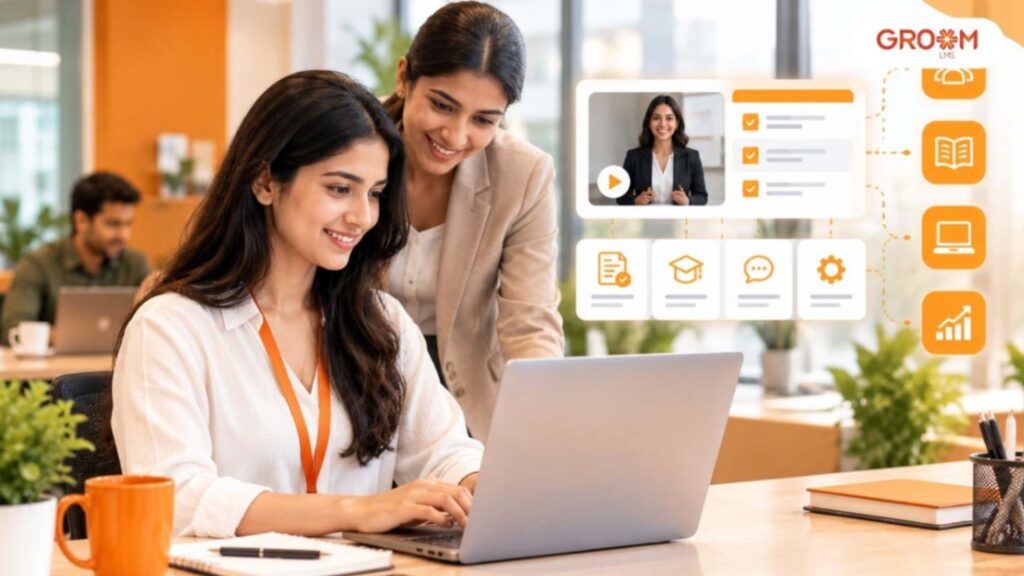
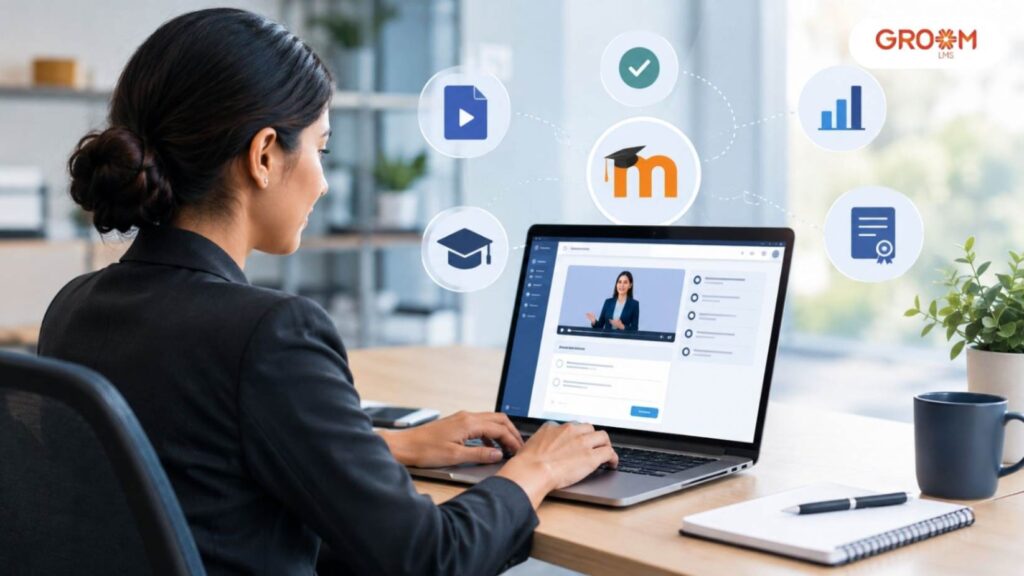
Platforms like GroomLMS make this transition simple. Organizations can create their own learning environment within minutes, upload training materials, automate enrollments, and monitor learner progress without depending on an IT team.
Let’s explore how your business can successfully move from classroom-based learning to digital training.
Why Classroom Training No Longer Meets Every Business Need
Classroom training still works well for certain situations. However, growing businesses often face challenges that limit its effectiveness.
Common issues include:
- High travel and venue costs
- Limited training schedules
- Inconsistent learning experiences
- Difficulty tracking employee progress
- Time away from productive work
- Manual record keeping
Moreover, as businesses expand, repeating the same sessions for new employees becomes increasingly difficult.
Digital learning solves these problems by making training available whenever employees need it.
What Is an LMS for Small Businesses?
A Learning Management System (LMS) is an online platform that helps businesses create, deliver, manage, and track employee training from one centralized location.
Instead of relying on printed manuals or classroom sessions, organizations can provide:
- Online courses
- Video lessons
- Interactive learning modules
- Assessments
- Certifications
- Progress reports
Most importantly, employees can learn at their own pace without disrupting daily operations.
Why Small Businesses Are Adopting Digital Training
Many business owners believe an LMS is only suitable for large enterprises. However, modern cloud-based platforms have made digital learning accessible for organizations of every size.
Businesses are adopting digital training because it offers:
Lower Training Costs
Digital courses eliminate recurring expenses such as:
- Printed materials
- External trainers
- Travel
- Venue bookings
Instead, one course can train hundreds of employees.
Faster Employee Onboarding
New employees can begin learning on their first day.
Rather than waiting for the next classroom session, they receive immediate access to onboarding courses, company policies, compliance modules, and job-specific training.
Consistent Learning Experience
Every employee receives identical training materials.
This consistency improves knowledge retention while reducing errors caused by inconsistent instruction.
Better Progress Tracking
Managers no longer need spreadsheets to monitor training.
An LMS automatically tracks:
- Course completion
- Assessment scores
- Certifications
- Learning progress
- Pending assignments
This helps HR teams stay organized while reducing administrative work.
Signs Your Business Is Ready for an LMS
If your organization experiences any of these challenges, it may be time to move toward digital learning.
You frequently:
- Repeat the same training sessions
- Hire new employees regularly
- Struggle to track completed training
- Spend too much on instructor-led sessions
- Need compliance records
- Train remote or hybrid employees
An LMS solves these problems while making learning more accessible.
How GroomLMS Simplifies Digital Training
Moving to digital learning doesn’t have to be complicated.
GroomLMS is designed for organizations that want simplicity without sacrificing powerful features.
Quick Setup Without IT Dependency
Businesses can create their own GroomLMS platform within minutes.
There is no lengthy installation process or complex technical configuration.
Teams can independently:
- Create courses
- Upload content
- Add learners
- Assign training
- Generate reports
This gives HR teams greater control over learning initiatives.
Centralized Learning Management
Instead of storing training resources across multiple platforms, GroomLMS keeps everything in one place.
Organizations can manage:
- Employee onboarding
- Compliance training
- Product knowledge
- Sales enablement
- Leadership development
- Skill enhancement
This creates a more organized learning ecosystem.
Automation That Saves Time
Manual administration consumes valuable working hours.
GroomLMS automates many repetitive tasks, including:
- User enrollment
- Learning assignments
- Certification generation
- Assessment scoring
- Reminder notifications
- Progress reporting
Consequently, HR professionals can focus on employee development instead of paperwork.
Learning Anytime, Anywhere
Modern employees expect flexibility.
With cloud-based access, learners can complete training:
- At the office
- From home
- During travel
- On multiple devices
This improves participation while supporting hybrid workplaces.
Practical Example: From Classroom to Digital
Imagine a growing marketing agency with 80 employees.
Previously, every new hire attended a two-day classroom orientation.
The HR team spent days coordinating schedules, booking meeting rooms, and printing materials.
After adopting GroomLMS:
- HR uploads onboarding content.
- Employees receive automatic course assignments.
- Managers monitor progress through dashboards.
- Certificates generate automatically.
- Reports are available instantly.
As a result, onboarding becomes faster, more consistent, and significantly less expensive.
Best Practices for a Successful LMS Implementation
Introducing digital learning works best when businesses follow a structured approach.
1. Start With High-Impact Training
Begin with:
- Employee onboarding
- Compliance
- Safety training
- Product knowledge
These courses usually provide immediate value.
2. Keep Lessons Short
Microlearning improves attention.
Instead of hour-long sessions, create modules lasting 5–15 minutes.
Employees remain engaged while learning more effectively.
3. Use Interactive Content
Mix different learning formats such as:
- Videos
- Quizzes
- Infographics
- Scenarios
- Assessments
Interactive learning improves retention.
4. Monitor Learning Analytics
Track important metrics like:
- Completion rates
- Quiz performance
- Active learners
- Training effectiveness
These insights help improve future learning programs.
5. Update Courses Regularly
Business processes evolve.
Review training materials periodically to ensure employees always receive accurate information.
Why GroomLMS Is an Ideal LMS for Small Businesses
Small businesses need software that grows alongside them.
GroomLMS offers several advantages:
- Fast cloud deployment
- Easy course management
- No continuous IT dependency
- Automated workflows
- Secure learning environment
- Scalable subscriptions
- Interactive assessments
- Certification management
- Reporting dashboards
- Continuous support
Additionally, GroomLMS serves organizations across industries with scalable digital learning solutions designed for long-term growth.
The Future of Employee Training Is Digital
Digital transformation has changed nearly every aspect of business operations.
Training should evolve as well.
Instead of scheduling repeated classroom sessions, businesses can build learning ecosystems that support continuous development.
An LMS allows organizations to improve employee skills, maintain compliance, reduce training costs, and create a culture of continuous learning.
For small businesses, adopting digital training today creates a stronger workforce for tomorrow.
Conclusion
Moving from classroom-based training to digital learning is no longer a luxury for growing businesses—it is a practical step toward greater efficiency and scalability. An LMS for Small Businesses helps organizations simplify onboarding, improve compliance, reduce training costs, and deliver consistent learning experiences. By eliminating unnecessary complexity and minimizing IT dependency, GroomLMS empowers HR teams and business leaders to launch, manage, and expand training programs with confidence. Whether you’re training ten employees or hundreds, adopting the right LMS can strengthen workforce development and support long-term business growth.
CTA
Ready to Simplify Employee Training?
Whether you’re onboarding new hires, delivering compliance training, or building a culture of continuous learning, GroomLMS makes digital training simple, scalable, and efficient.
Request a personalized demo today and discover how GroomLMS can help your business launch, automate, and manage training with ease.
Frequently Asked Questions(FAQs)
What is an LMS for small businesses?
An LMS for small businesses is a cloud-based learning platform that helps organizations create, manage, deliver, and track employee training efficiently while reducing costs and administrative effort.
How does an LMS improve employee training?
An LMS centralizes training materials, automates enrollments, tracks learner progress, generates reports, and provides employees with flexible access to learning from any location.
Is GroomLMS suitable for growing businesses?
Yes. GroomLMS is designed for startups, MSMEs, and enterprises, offering scalable subscriptions, easy deployment, automated workflows, and comprehensive learning management without requiring continuous IT support.
Can GroomLMS support compliance training?
Absolutely. GroomLMS enables organizations to assign mandatory courses, conduct assessments, issue certifications, and maintain accurate training records for compliance purposes.
What types of training can businesses deliver through GroomLMS?
Businesses can use GroomLMS for employee onboarding, compliance training, product knowledge, sales training, leadership development, customer service training, technical upskilling, and continuous professional development.