Workplace learning is evolving as organizations adapt to changing business requirements, new technologies, and increasingly diverse workforce needs. Employees must continuously develop their skills, understand new processes, and keep pace with organizational changes. Traditional training methods can struggle to meet these expectations when learning programs are spread across different locations, departments, and systems.
Businesses now need learning environments that offer more than basic course delivery. They require platforms that simplify training administration, support different learning formats, provide actionable insights, and help employees develop relevant skills. Innovative LMS solutions address these needs by combining digital learning, automation, assessments, analytics, and flexible training management within a centralized environment.
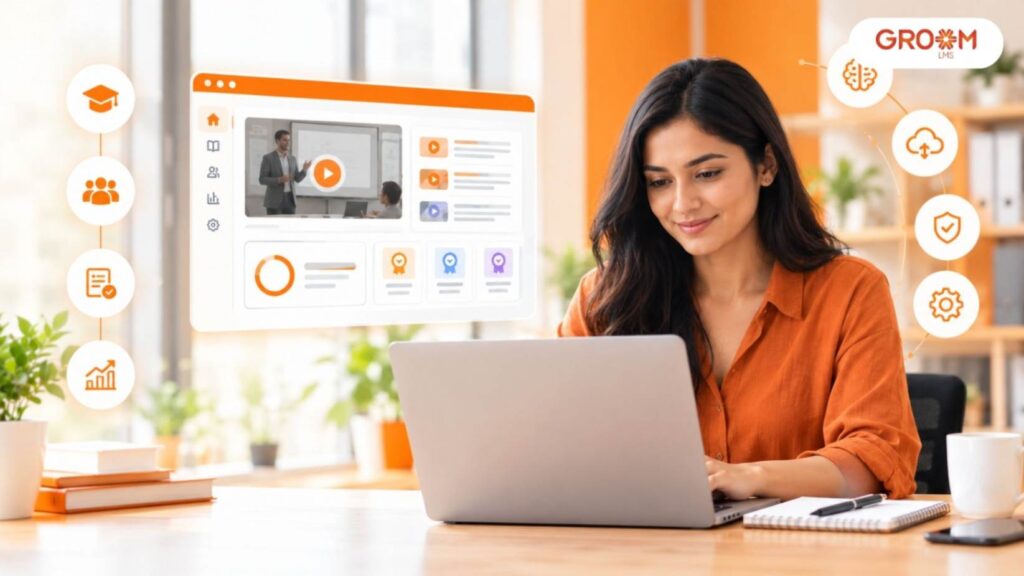
GroomLMS supports this shift by providing organizations with digital learning capabilities that help them create, deliver, manage, and evaluate employee training. By bringing different learning activities together, an LMS can help businesses move beyond traditional training methods and develop a more structured approach to continuous employee development.
What Are Innovative LMS Solutions?
Innovative Learning Management System (LMS) solutions are digital platforms that use modern learning technologies and management capabilities to improve how organizations deliver, organize, and measure training.
Unlike basic systems that primarily host online courses, modern LMS platforms can support multiple stages of the learning process. They help organizations manage learners, organize content, assign courses, conduct assessments, monitor progress, and evaluate training outcomes.
The level of innovation depends on the platform’s capabilities and how effectively an organization uses them to address its learning requirements.
Common capabilities may include:
- Centralized course and content management
- Role-based learning paths
- Interactive learning experiences
- Assessments and quizzes
- Automated course assignments and reminders
- Digital certificates
- Learning analytics and reporting
- Virtual instructor-led training
- SCORM and xAPI support
- AI-assisted learning and content development, where available
These capabilities allow businesses to create learning environments that are more organized, flexible, and measurable than disconnected training processes.
Why Businesses Need Innovative LMS Solutions
Employee training is closely connected to organizational performance. When employees understand their responsibilities and develop the skills required for their roles, businesses are better positioned to adapt to operational and market changes.
However, managing learning through spreadsheets, email reminders, classroom schedules, and separate content repositories can become increasingly difficult as an organization grows.
Innovative LMS solutions help address these challenges by connecting learning activities within a centralized system.
Managing Training Across Multiple Locations
Organizations with distributed workforces often need to deliver consistent training to employees working across offices, branches, remote locations, and field environments.
A digital learning platform can provide centralized access to training materials and assigned courses. Employees can participate in learning according to the organization’s schedule and the platform’s access options.
Supporting Continuous Skill Development
Employee development is not limited to initial onboarding. New technologies, updated processes, and changing job responsibilities create ongoing learning requirements.
An LMS can help organizations establish structured learning paths that employees can follow as their roles and skills evolve.
Reducing Administrative Work
Training teams frequently spend time assigning courses, sending reminders, maintaining records, and compiling reports.
Depending on its capabilities, an LMS can automate several routine activities, allowing HR and L&D teams to focus more on training quality and program improvement.
Improving Training Visibility
Without centralized records, understanding employee participation and training progress can be difficult.
LMS dashboards and reports can provide visibility into course completion, assessment performance, and learner activity, helping administrators identify areas that need attention.
Key Features That Make LMS Solutions Innovative
Innovation in learning management comes from combining useful technology with a clear understanding of employee and business needs.
1. Personalized and Role-Based Learning
Employees in different departments require different knowledge and skills. A sales representative may need product knowledge and communication training, while a compliance professional may require detailed instruction on policies and regulatory responsibilities.
Role-based learning paths help organizations organize courses according to job functions, departments, experience levels, or specific development objectives.
For example, a new employee could receive an onboarding pathway covering company policies, workplace procedures, role-specific skills, and an introductory assessment.
As employees progress, additional courses can support their professional development.
2. Interactive Learning Experiences
Traditional training materials can become difficult to engage with when they rely entirely on long presentations or text-heavy content.
Modern LMS environments can support multimedia learning, quizzes, knowledge checks, interactive modules, and scenario-based activities.
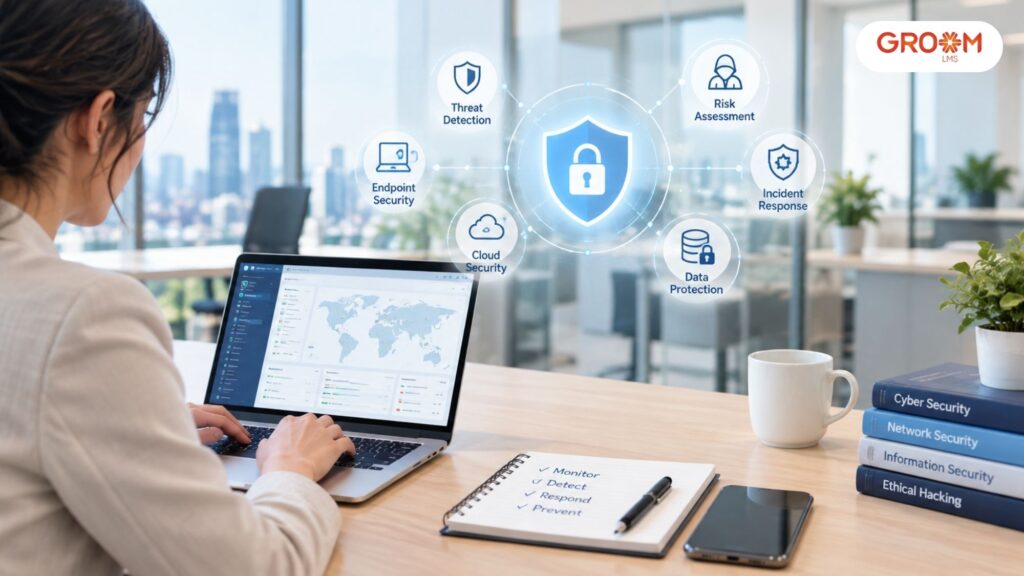
Consider a cybersecurity course that presents a fictional phishing email and asks employees to identify warning signs. Rather than simply reading a security policy, learners must apply their knowledge to a realistic situation.
Such activities can help make training more relevant and encourage active participation.
3. Automation and Simplified Administration
Automation is an important capability for organizations managing recurring or large-scale training programs.
Depending on the LMS, routine activities may include course enrollment, assignment notifications, completion reminders, and training reports.
For example, an organization can establish an onboarding process in which new employees receive relevant courses as part of their initial learning program.
Automating suitable tasks reduces repetitive administrative work and makes training processes easier to manage consistently.
4. Learning Analytics and Reporting
Training data becomes valuable when organizations use it to understand learning progress and improve their programs.
An LMS may provide information about course completion, assessment results, learner activity, and participation.
These insights can help training managers identify courses that learners struggle with or topics that require additional explanation.
However, analytics should be interpreted in context. High completion rates do not automatically mean employees can apply everything they have learned. Organizations should combine platform data with relevant assessments, feedback, and practical performance indicators.
5. Flexible Learning Delivery
Different learning objectives require different delivery methods.
Some topics work well as self-paced modules, while others benefit from live discussions, demonstrations, or instructor-led sessions.
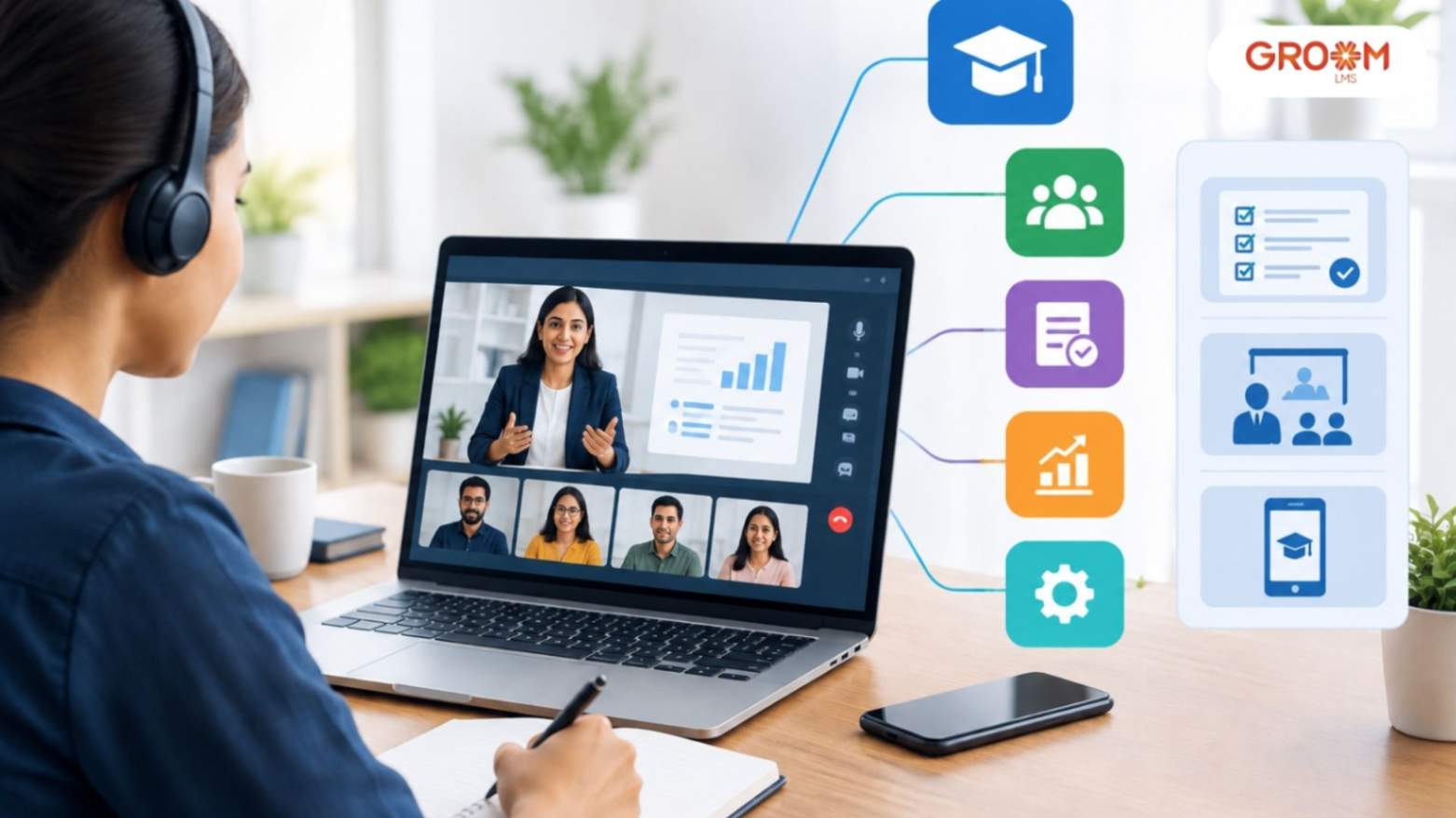
Innovative LMS solutions can support a combination of digital courses, multimedia resources, assessments, and virtual instructor-led training, depending on the platform’s functionality.
This flexibility allows organizations to select learning formats that suit their employees, content, and operational requirements.
How Innovative LMS Solutions Improve Corporate Training
The effectiveness of corporate training depends on how well learning activities connect with business objectives.
An LMS can help organizations build a more structured training process by connecting course development, delivery, assessment, and evaluation.
Creating a Centralized Learning Environment
When training materials are scattered across emails, shared drives, and separate applications, employees may struggle to find the information they need.
A centralized LMS provides an organized location for learning resources, assigned courses, assessments, and relevant training records.
This makes it easier for employees to access learning and for administrators to manage training activities.
Standardizing Learning Across Teams
Organizations need consistent training when employees perform similar responsibilities across different departments or locations.
A centralized platform can help deliver standardized learning content and assessments. Role-specific courses can then address the additional requirements of individual teams.
Connecting Learning With Business Goals
Training programs should address identifiable organizational needs rather than simply increase the number of completed courses.
For instance, a business introducing a new product may need to train customer-facing employees on product features, common questions, and service procedures.
An LMS can organize the required courses and assessments while helping managers monitor employee progress.
Encouraging Continuous Learning
A structured digital learning environment can make it easier to provide refresher courses, additional modules, and ongoing professional development opportunities.
Employees can continue building their capabilities instead of relying entirely on occasional classroom sessions.
The Role of AI in Innovative LMS Solutions
Artificial intelligence is creating additional possibilities for digital learning. Depending on the tools available, AI can assist with content development, learning recommendations, question generation, learner support, and the analysis of learning data.
For example, AI-assisted authoring tools may help instructional designers prepare an initial course outline or generate draft assessment questions. Learning recommendation systems may also help suggest relevant resources based on defined learner needs or activity.
These capabilities can support efficiency, but they require appropriate oversight.
Training teams should review AI-generated material for accuracy, relevance, accessibility, and alignment with organizational policies. Sensitive employee data should also be handled according to applicable privacy and security requirements.
AI is most useful when it supports sound instructional design rather than replacing clear learning objectives, subject-matter expertise, and human judgment.
How to Choose the Right Innovative LMS Solution
Selecting an LMS requires more than comparing feature lists. Businesses should evaluate how a platform fits their workforce, learning strategy, existing systems, and future requirements.
Understand Your Training Objectives
Begin by identifying the problems the LMS should solve.
Your priorities might include employee onboarding, compliance training, product education, leadership development, technical upskilling, or customer training.
Clear objectives help narrow the available options.
Evaluate Ease of Use
An LMS should be accessible to both learners and administrators.
Employees should be able to navigate their learning environment without unnecessary complexity, while training teams should be able to manage routine activities efficiently.
Check Content Compatibility
Review the learning formats your organization uses and determine whether the LMS supports them.
If your training programs use standardized e-learning packages, check the platform’s compatibility with the relevant standards, such as SCORM or xAPI.
Review Reporting Capabilities
Determine which training metrics matter to your organization.
You may need completion reports, assessment results, learner activity, certification status, or department-level summaries. Confirm that the platform provides the required information.
Consider Scalability
Training requirements may change as the workforce grows or new learning programs are introduced.
Choose a platform that can accommodate your expected growth, additional users, expanding content libraries, and evolving administrative requirements.
Assess Integration Requirements
Organizations often use HRMS, CRM, communication, and other business applications.
Review whether the LMS offers the integrations or technical options needed to connect learning activities with existing systems.
Examine Support and Security
Evaluate available support, access controls, data protection measures, and administrative permissions.
These considerations are particularly important when an LMS stores employee information, training records, or sensitive learning content.
Common Mistakes to Avoid When Implementing an LMS
Even a feature-rich platform may not deliver the intended value if its implementation is poorly planned.
Choosing features without defining objectives: Begin with learning and business requirements instead of selecting a platform solely because it offers numerous features.
Uploading content without instructional design: Organize learning around clear objectives, relevant examples, and suitable assessments.
Ignoring learner experience: Complicated navigation and irrelevant assignments can discourage participation.
Measuring completion alone: Course completion is useful, but it should be supported by assessment results, feedback, and other appropriate indicators.
Failing to update training: Review learning materials periodically and whenever relevant policies, processes, or business requirements change.
Neglecting administrator training: Ensure that the people managing the LMS understand its capabilities and can use them effectively.
Addressing these issues early can help organizations build a more sustainable learning environment.
How GroomLMS Supports Innovative Corporate Learning
GroomLMS provides a centralized digital learning environment designed to help organizations manage different aspects of employee training.
Its capabilities include course management, multimedia learning, assessments, certifications, analytics, dashboards, SCORM and xAPI support, and virtual instructor-led training.
These capabilities can support a range of learning initiatives, from employee onboarding and compliance education to product training and professional development.
For example, an organization could create a learning pathway for new employees, assign relevant courses, conduct knowledge assessments, and use available reporting tools to monitor progress.
The same learning environment could later support additional training programs as business requirements evolve.
By connecting learning content with training administration and progress monitoring, GroomLMS can help organizations establish a more organized approach to digital learning.
The value comes not simply from making courses available online, but from using the platform to structure, manage, and continuously improve employee development.
Measuring the Success of Innovative LMS Solutions
Implementing an LMS is only the beginning. Organizations should evaluate whether their learning programs are achieving their intended outcomes.
Useful indicators may include:
- Course completion: Are employees completing their assigned training?
- Assessment performance: Are learners demonstrating an understanding of the material?
- Learner participation: Are employees engaging with the learning activities?
- Skill development: Are relevant skills improving through assessments or practical evaluation?
- Learner feedback: Do employees find the content useful and accessible?
- Administrative efficiency: Has the LMS reduced repetitive training management tasks?
- Business alignment: Are learning initiatives addressing the needs identified when the program was designed?
The most appropriate measurements depend on the learning objectives. For example, a compliance program may prioritize completion and knowledge checks, while a product training initiative may focus on product understanding and relevant performance indicators.
Regular reviews allow organizations to refine content, improve learning pathways, and make better use of their LMS.
The Future of Innovative LMS Solutions
Digital learning is moving toward more flexible, connected, and data-informed approaches.
Organizations are exploring AI-assisted content development, interactive learning, virtual classrooms, learning analytics, and automated workflows to improve training delivery.
Integration with other business systems may also help organizations connect learning with employee development processes and broader operational requirements.
However, technological advancement alone does not guarantee effective learning. Employees still need relevant content, accessible learning experiences, clear objectives, and opportunities to apply new knowledge.
The most valuable LMS solutions will be those that combine useful technology with thoughtful learning design and measurable organizational goals.
Conclusion
Innovative LMS solutions are helping organizations rethink how they deliver, manage, and measure employee training. By combining centralized course management, interactive learning, automation, assessments, analytics, and flexible delivery methods, an LMS can help businesses move beyond disconnected training activities.
Choosing the right platform requires a clear understanding of organizational goals, learner needs, content requirements, integrations, and future growth. Equally important is the way the organization designs and manages its learning programs after implementation.
GroomLMS provides a centralized environment for managing digital learning through capabilities that support course delivery, assessments, certifications, reporting, and virtual instructor-led training.
With a well-planned implementation and a focus on continuous improvement, businesses can use innovative LMS solutions to create more structured learning experiences, support employee development, and align training with long-term organizational objectives.
Build a Smarter Learning Environment With GroomLMS
Move beyond disconnected training processes with a digital learning platform designed to support structured and scalable employee development.
GroomLMS helps organizations bring learning content, assessments, learner progress, and training management together in one environment.
Contact Us | Join GroomLMS | Chat on WhatsApp
Frequently Asked Questions (FAQs)
What are innovative LMS solutions?
Innovative LMS solutions are digital learning platforms that use capabilities such as automation, interactive content, assessments, analytics, and flexible learning delivery to help organizations manage employee training more effectively.
Why are innovative LMS solutions important for businesses?
They can help businesses organize training, support continuous employee development, standardize learning across locations, reduce repetitive administrative work, and monitor training progress.
Which features should businesses look for in an innovative LMS?
Important features may include course management, role-based learning paths, assessments, reporting, automation, content compatibility, integrations, security, and a user-friendly learning experience.
Can an LMS support AI-powered learning?
Some LMS platforms integrate AI-enabled capabilities for tasks such as content development, learning recommendations, learner assistance, and data analysis. Available functions vary by platform and should be evaluated against business needs.
How can an LMS improve employee engagement?
An LMS can support multimedia courses, interactive activities, knowledge checks, role-specific learning paths, and flexible access to training. Effective instructional design is still essential for keeping learning relevant and useful.