
Insurance brokerage firms operate in a dynamic environment where employees must understand insurance products, customer requirements, documentation procedures, sales practices, and applicable regulatory obligations. As product portfolios expand and business processes evolve, keeping employees informed becomes an ongoing responsibility. Training helps insurance teams maintain product knowledge, communicate accurately with customers, and follow established organizational procedures.
Managing these learning requirements manually can become difficult as brokerage firms grow. Training coordinators may need to schedule sessions, distribute learning materials, send reminders, track attendance, assess employee knowledge, and maintain training records. When these activities are handled through disconnected spreadsheets, emails, and documents, administrative work can increase and important follow-ups may be overlooked.
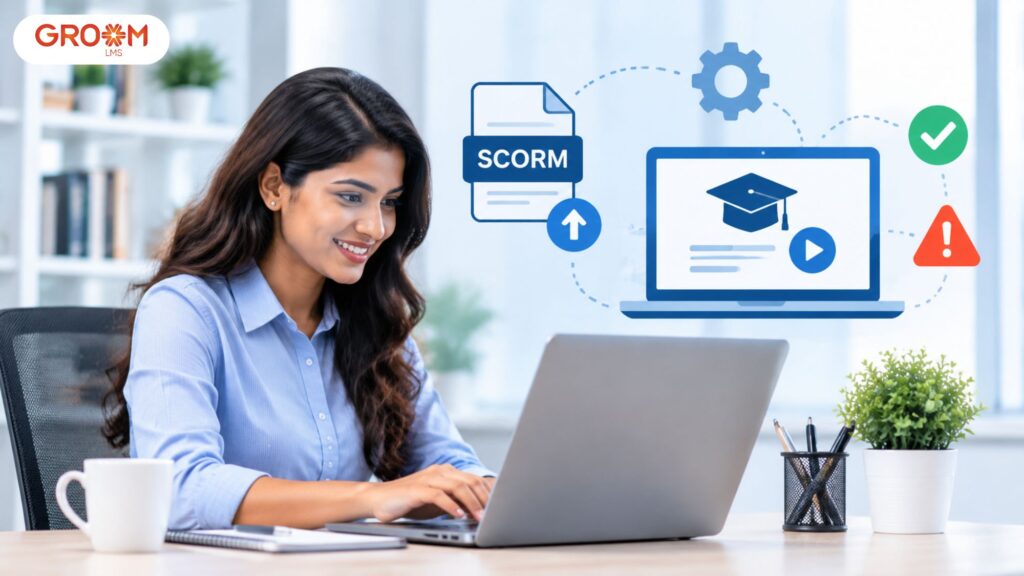
Insurance broker training automation software offers a more structured way to organize employee learning and training administration. By combining automated workflows with digital courses, assessments, progress tracking, and reporting, insurance businesses can simplify training management. GroomLMS provides a centralized learning environment that organizations can use to manage digital training programs, helping insurance teams connect employee development with broader business and operational objectives.
What Is Insurance Broker Training Automation Software?
Insurance broker training automation software refers to digital tools that help insurance brokerage firms organize, deliver, track, and administer employee training through automated or streamlined workflows.
Depending on the platform, these tools may support course assignments, employee enrollments, training reminders, assessments, completion records, certifications, and performance reporting.
The purpose is to reduce repetitive administrative tasks while providing employees with structured access to relevant learning materials.
For example, when an insurance brokerage hires a new employee, the training process might include an introduction to insurance products, customer communication procedures, internal systems, documentation requirements, and relevant compliance topics.
A training automation solution can help organize these activities into a defined learning program. Employees can complete assigned modules, while administrators monitor progress and identify outstanding requirements.
However, training automation should complement professional judgment and appropriate compliance oversight. Software can help manage learning activities, but it cannot independently guarantee regulatory compliance or ensure that every employee applies policies correctly.
Why Do Insurance Brokers Need Automated Training?
Insurance brokers and their teams must maintain knowledge across several areas, including product information, customer service, documentation, sales processes, and risk awareness.
As firms expand their workforce or introduce new products, training requirements can become more complex.
1. Changing Insurance Products
Insurance products may differ in coverage, exclusions, eligibility requirements, premiums, documentation, and claims procedures.
Employees need access to accurate and current information to explain products responsibly.
A centralized digital learning program can help organizations distribute product training and organize updates when relevant information changes.
2. Evolving Compliance Requirements
Insurance professionals operate within regulatory frameworks and organizational policies that may change over time.
Training programs can help employees understand relevant obligations, documentation procedures, customer protection principles, and internal escalation processes.
Automated reminders and completion tracking can support the administration of assigned training, although organizations must determine the actual training requirements applicable to their business and employees.
3. Growing Teams and Distributed Offices
Brokerage firms with multiple branches or remote employees may find it challenging to deliver consistent training through classroom sessions alone.
Digital learning makes it easier to distribute standardized training materials across locations and working schedules.
4. Administrative Workload
Manually assigning courses, contacting employees, updating spreadsheets, and compiling reports can consume valuable time.
Automation can reduce some of these repetitive tasks, allowing training teams to focus more on content quality and employee development.
5. Maintaining Training Records
Organizations may need to review training participation, assessment results, and completion status.
A centralized system can make these records easier to organize and retrieve, depending on the platform’s reporting and record-management capabilities.
Key Features of Insurance Broker Training Automation Software
The right solution should support the brokerage firm’s actual training requirements rather than simply offer a long list of features.
Automated Course Assignments
Different employees require different learning programs.
New employees may need onboarding, while experienced brokers may require product updates, refresher learning, or role-specific development.
Automated assignment workflows can help deliver relevant courses according to predefined roles, groups, or training requirements, where supported by the platform.
Centralized Learning Content
Insurance training materials can include product guides, presentations, videos, process documents, quizzes, and other digital resources.
A centralized learning platform helps organizations organize these materials and provide employees with a consistent learning environment.
Training teams can also review and update content when product information or internal procedures change.
Assessments and Knowledge Checks
Completing a course does not necessarily mean that an employee understands the information.
Quizzes and assessments can help evaluate knowledge of insurance products, customer service procedures, documentation practices, and other relevant subjects.
Results may also reveal topics where employees need additional instruction.
Progress Tracking and Reporting
Training administrators need visibility into employee participation and completion.
Depending on available functionality, reports may show assigned courses, completion status, assessment scores, and outstanding learning activities.
These insights can help managers identify employees who require follow-up or additional support.
Training Reminders and Notifications
Employees may overlook assigned training when they are managing customer requests, policy renewals, or sales activities.
Automated reminders can help bring attention to upcoming deadlines and incomplete learning activities.
The timing and frequency of reminders should be configured carefully to avoid unnecessary notifications.
Certifications and Completion Records
Some training programs require employees to demonstrate knowledge or complete defined learning activities.
Where supported, digital certificates and completion records can provide a structured record of participation or successful assessment.
Organizations should distinguish between a platform-generated training certificate and any professional licence or regulatory certification that requires separate authorization.
Types of Training Insurance Brokers Can Automate
Insurance brokerage firms can organize multiple learning initiatives within a structured digital training environment.
Insurance Product Training
Employees need to understand the products they discuss with customers.
Training can cover policy features, coverage limits, exclusions, eligibility conditions, documentation requirements, and relevant product differences.
When products change, updated learning materials and assessments can help reinforce accurate product knowledge.
Regulatory and Compliance Awareness
Compliance-related training may cover applicable regulations, internal policies, customer protection, data handling, documentation, and responsible sales practices.
The exact content should reflect the firm’s activities, jurisdiction, and applicable requirements.
Automated course assignments and progress reports can help administrators manage these programs more consistently.
Customer Service and Communication
Insurance brokers often explain complex information to customers who may have different levels of insurance knowledge.
Training can help employees communicate policy details clearly, respond to questions, manage complaints, and explain the appropriate next steps.
Scenario-based exercises can give employees opportunities to practice customer conversations before applying these skills in real situations.
Sales and Advisory Skills
Brokerage teams may need training in customer needs analysis, product suitability, professional communication, and responsible sales processes.
Role-specific learning can help employees understand how to identify customer requirements and explain relevant options without misrepresenting policy features.
Claims and Documentation Procedures
Employees may need to understand the documentation and communication processes associated with claims.
Training can explain the relevant internal workflows, document-handling procedures, escalation routes, and responsibilities of different team members.
These courses should be reviewed when organizational processes change.
How Training Automation Improves Operational Efficiency
Automating training administration can help insurance firms create more predictable learning workflows.
Consider a brokerage firm onboarding 30 employees across several branches.
Without a centralized process, the training coordinator may need to send individual emails, share documents, schedule sessions, and update completion records manually.
With a suitable training platform, the organization may be able to assign a predefined onboarding program, provide access to digital courses, send reminders, and review progress through available reports.
The automation does not remove the need for trainers or managers. Instead, it can reduce repetitive coordination and make outstanding learning activities easier to identify.
Over time, these improvements may help the firm manage a larger training program without increasing administrative effort at the same rate as its workforce.
Actual efficiency gains depend on the firm’s processes, the capabilities of the selected software, and how well the solution is implemented.
Challenges in Insurance Training Automation
Although automation can simplify training management, organizations should address several considerations before adopting a solution.
Keeping Content Accurate
Outdated product information or procedures can create confusion and operational risk.
Insurance firms should establish clear ownership of training content and review it whenever relevant products, policies, processes, or requirements change.
Selecting the Right Level of Automation
Not every learning activity needs to be automated.
Routine assignments and reminders may be suitable for automation, while complex training decisions may require input from subject-matter experts, compliance professionals, or managers.
Supporting Different Learning Needs
New employees, experienced brokers, customer service representatives, and managers may need different training.
Role-based learning paths can help make training more relevant while avoiding unnecessary assignments.
Integrating Existing Systems
Insurance businesses may already use CRM systems, policy administration tools, HR platforms, and communication applications.
Before choosing a solution, organizations should evaluate integration requirements and confirm which connections are supported.
Protecting Employee and Customer Information
Training systems may contain employee records, assessment results, and other sensitive information.
Organizations should review access controls, data protection practices, retention requirements, and security capabilities before implementation.
Best Practices for Implementing Training Automation
A successful implementation begins with a clear understanding of the brokerage firm’s learning requirements.
Map current training processes: Identify manual activities, recurring training needs, and common administrative bottlenecks.
Define learning objectives: Determine what employees should know or be able to do after completing each program.
Create role-based learning paths: Assign training according to responsibilities, experience, and relevant business requirements.
Review content regularly: Establish a process for updating product information, internal procedures, and compliance-related learning.
Use assessments appropriately: Evaluate understanding through relevant quizzes, scenarios, and knowledge checks.
Monitor meaningful metrics: Review completion, assessment performance, and outstanding learning activities.
Provide human support: Ensure employees can ask questions and receive guidance when a topic requires further explanation.
Evaluate the results: Compare administrative effort and learning outcomes before and after implementation where suitable data is available.
These practices help organizations use automation to improve the learning process rather than simply digitizing existing administrative problems.
The Role of an LMS in Insurance Broker Training Automation
A Learning Management System (LMS) can provide the central environment for organizing digital training programs and managing learner progress.
Depending on its capabilities, an LMS may support course management, assessments, learner assignments, training records, certifications, analytics, and reporting.
For insurance brokers, this can help connect onboarding, product education, compliance awareness, sales training, and ongoing professional development within one learning environment.
For example, a brokerage firm could organize an onboarding program containing product training, customer service procedures, documentation guidance, and a final knowledge assessment.
Administrators could then review available reports to understand whether employees have completed their assigned learning and where additional support may be necessary.
An LMS does not automatically replace specialized insurance administration systems. Instead, it focuses on managing learning and training activities, while integrations may connect it with other business applications when supported.
How GroomLMS Supports Digital Training Management
GroomLMS provides a centralized environment for managing digital learning programs, with capabilities covering course management, assessments, certifications, analytics, dashboards, and learner progress tracking.
These capabilities can help organizations structure employee training and connect learning activities with assessment and reporting workflows.
For an insurance brokerage, this may involve organizing digital courses around product knowledge, customer service, internal procedures, and professional development.
Training teams can structure learning materials, assign relevant courses, and review available progress information to identify incomplete training or potential knowledge gaps.
GroomLMS can also support learning initiatives beyond insurance-specific training, including employee onboarding, compliance awareness, and broader workforce development.
Organizations should evaluate the platform’s available automation features, reporting options, integrations, and security capabilities against their operational requirements before implementation.
Measuring the Success of Training Automation
Training automation should be evaluated through both administrative and learning outcomes.
Administrative indicators may include the time required to assign courses, the effort involved in following up with employees, and the ease of retrieving training records.
Learning indicators may include course completion, assessment performance, employee feedback, and improvement in knowledge following training.
Insurance firms can also review whether employees demonstrate better understanding of product information and internal procedures through appropriate workplace assessments and supervisory feedback.
However, training completion alone does not establish that employees consistently follow the correct procedures. Organizations should combine learning data with suitable quality checks, professional supervision, and other relevant performance measures.
The objective is to build a training process that is easier to manage while supporting meaningful employee development.
Conclusion
Insurance broker training automation software can help brokerage firms organize employee learning, streamline repetitive administrative tasks, and improve visibility into training activities. From product knowledge and customer service to compliance awareness and professional development, structured digital learning can support the changing needs of insurance teams.
Successful implementation requires accurate content, relevant learning paths, appropriate assessments, reliable reporting, and regular review. Automation should support these activities without replacing the professional judgment needed to maintain accurate training and responsible business practices.
An LMS can bring many of these learning activities together in a centralized environment. GroomLMS provides digital learning management capabilities that can help organizations structure courses, assessments, certifications, and training progress within their broader employee development programs.
By combining appropriate automation with well-designed learning, insurance brokerage firms can create a more organized and scalable approach to employee training.
Simplify Digital Training Management with GroomLMS
Create a more structured learning environment for employee development, digital courses, assessments, and training progress.
Contact Us | Join GroomLMS | Chat on WhatsApp
Frequently Asked Questions (FAQs)
What is insurance broker training automation software?
It refers to digital tools that help insurance brokerage firms organize and manage employee training through features such as course assignments, reminders, assessments, progress tracking, and reporting.
Why do insurance brokers need automated training?
Automated training workflows can reduce repetitive administrative tasks, support consistent learning delivery, and make employee training progress easier to monitor.
What training can insurance brokers automate?
Training may cover insurance products, customer service, sales practices, documentation, claims procedures, internal policies, compliance awareness, and employee onboarding.
Can training automation support compliance awareness?
Yes. Digital learning systems can help assign relevant training, send reminders, track completion, and maintain available learning records. However, they do not independently guarantee regulatory compliance.
How does an LMS help insurance brokerage firms?
An LMS can help organize courses, manage assessments, assign learning activities, track progress, maintain training records, and review reports, depending on the platform’s capabilities.