The skills employees need today can change quickly. New technologies, evolving customer expectations, and changing job responsibilities mean that learning cannot stop after onboarding.
Yet, keeping employees up to date is not always easy. Training teams often have to manage course creation, employee enrollment, progress tracking, assessments, and reports across different tools. As the workforce grows, these tasks become even harder to manage.
That is where employee upskilling with e-learning can make a difference. Instead of relying only on classroom sessions or manual training processes, organizations can provide employees with structured digital learning that they can access when needed.
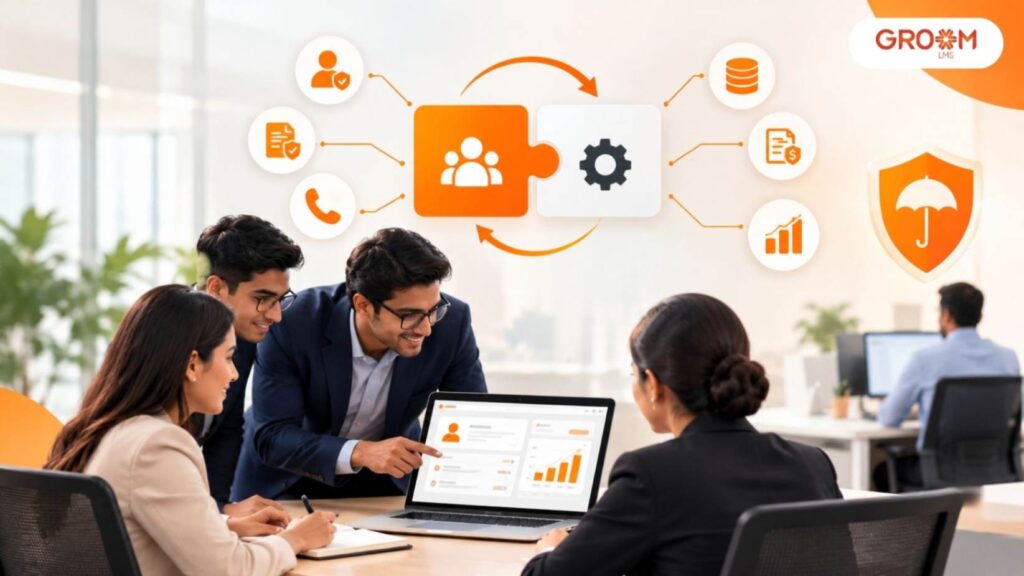
More importantly, a suitable learning management system can bring training activities into one place. L&D teams can create courses, assign learning, monitor progress, and manage assessments without depending on IT teams for every small update.
GroomLMS supports this approach by helping organizations create, manage, automate, and scale digital learning programs independently.
Why Employee Upskilling Matters
Upskilling is no longer just an employee development initiative. It has become an important part of staying competitive.
When employees develop new skills, organizations can respond more effectively to changes in technology and business requirements. Employees also become better prepared to take on new responsibilities.
For example, a company introducing a new CRM system may need to train its sales team before the system goes live. Similarly, a growing organization may need to develop managers internally rather than relying entirely on external hiring.
However, effective upskilling requires more than making courses available. Employees need relevant content, convenient access, clear learning goals, and a way to measure progress.
That is why organizations need a structured approach to digital learning.
What Makes Traditional Upskilling Difficult to Scale?
Many training programs begin with simple methods. An L&D team may conduct live sessions, share resources through email, and maintain employee records in spreadsheets.
This can work for a small team. However, the process becomes difficult when hundreds or thousands of employees need training.
As the number of learners increases, training teams have to spend more time handling administrative work. They may need to manually send reminders, update completion records, collect assessment results, and prepare reports.
There is also the problem of consistency. Employees in different locations may receive different training experiences or miss important updates.
Furthermore, making even a small change to a training program may require technical assistance when the organization does not have an easy-to-manage learning platform.
An LMS can reduce much of this complexity by bringing these activities into a centralized system.
How E-Learning Supports Employee Upskilling
E-learning gives organizations a flexible way to deliver and manage employee development.
Instead of asking every employee to attend the same classroom session at a fixed time, organizations can provide digital courses that employees can access according to their schedules. This is particularly useful for distributed and hybrid teams.
A typical upskilling program can begin by identifying a specific skill gap. The L&D team can then create or upload relevant learning content and assign it to the appropriate employees.
Once employees begin learning, the organization can monitor their progress, use assessments to check understanding, and provide certifications when required.
The entire process becomes easier to manage when these activities are connected through an LMS.
This also allows L&D teams to spend less time maintaining manual records and more time improving the actual learning experience.
What Should You Look for in an LMS?
Not every LMS will suit every organization. The right platform should make learning easier for both administrators and employees.
Easy Course Management
L&D teams should be able to create, organize, update, and manage courses without complicated technical processes.
This becomes particularly important when training content needs frequent updates. For instance, product training may need to change whenever a new feature is introduced.
Training Automation
Automation can remove many repetitive tasks from an L&D team’s workload.
Course assignments, learner reminders, progress tracking, and completion records can be managed more efficiently through an LMS. As a result, training teams can focus on designing better learning programs instead of constantly updating spreadsheets.
Assessments and Certifications
Completing a course does not always mean that an employee has understood the material.
Assessments can help organizations check knowledge and identify areas that need additional attention. Certifications can also give employees a clear record of completed training.
Reporting and Analytics
Training data becomes much more useful when it is easy to understand.
An LMS with reporting and dashboards can help L&D teams see how employees are progressing and where learners may be struggling. These insights can then guide future training decisions.
Scalability
Your training platform should be able to grow with your organization.
A company may begin with onboarding and later introduce compliance training, leadership development, technical courses, or customer education. Therefore, the LMS should support different learning requirements without creating additional complexity.
How GroomLMS Supports Employee Upskilling with E-Learning
GroomLMS is built to help organizations manage digital learning without unnecessary technical dependency.
Organizations can create a GroomLMS instance online within seconds and manage their learning environment independently. This can be especially useful for L&D teams that need to launch or update training programs quickly.
The platform supports course development, assessments, certifications, virtual training, analytics, and other digital learning requirements.
For example, an organization could use GroomLMS to create separate learning programs for new employees, sales teams, managers, or technical staff. Each group can receive training that matches its responsibilities and development needs.
The platform can also support different stages of the employee learning journey. An organization could begin with onboarding and gradually introduce role-based upskilling, compliance learning, and leadership development.
This approach allows learning programs to expand as business needs change.
A Practical Approach to Building an Upskilling Program
A successful program does not need to begin with dozens of courses. Starting small can actually make implementation easier.
First, identify one important skill gap. Talk to managers and employees to understand where performance or knowledge needs improvement.
Next, create focused learning content around that need. Avoid adding information simply because it is available. Employees should be able to see a clear connection between the training and their actual work.
Then, add an assessment or practical activity. This gives learners an opportunity to apply what they have learned and gives the organization a better understanding of learning outcomes.
Once the program is live, monitor participation and results. If employees are consistently struggling with a particular topic, the content may need to be simplified or redesigned.
Finally, continue improving the program based on feedback and learning data.
This creates a continuous learning cycle rather than treating upskilling as a one-time event.
Example: Upskilling a Growing Sales Team
Consider a company that is expanding its sales team and introducing a new product.
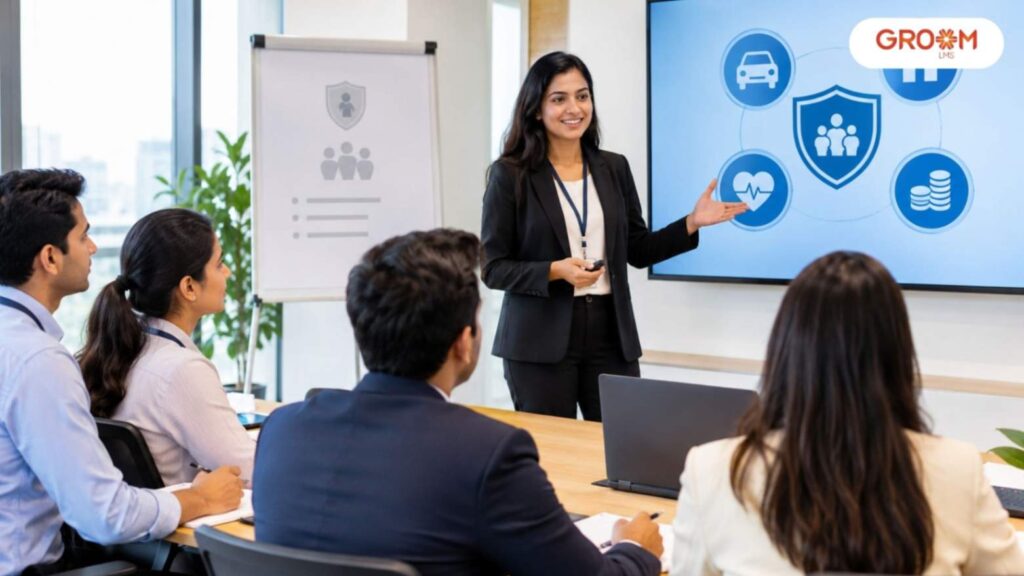
A classroom-only approach could require the entire sales team to attend several sessions. Coordinating schedules across locations could take considerable time.
With an e-learning approach, the company could create a structured program covering product knowledge, customer conversations, sales processes, and the new product’s key features.
Employees could complete the modules online and take assessments after important sections. Managers could then monitor progress and identify employees who may need additional support.
The same learning program could also be updated when the product changes.
Therefore, the organization gets a more consistent training process without rebuilding the program from scratch every time a requirement changes.
How to Make E-Learning More Effective
A learning platform provides the infrastructure, but the quality of the learning experience still matters.
Keep courses focused and relevant to the employee’s role. Long, information-heavy modules can make learning feel like another task on an already crowded workday.
Instead, break complex topics into manageable sections. Include examples from real workplace situations and give employees opportunities to apply what they have learned.
It is also important to connect training with measurable outcomes. Rather than simply asking whether employees completed a course, consider whether the training improved a specific skill or supported a business objective.
Most importantly, make learning continuous.
Employees should not have to wait for an annual training session to develop new skills. With digital learning, organizations can provide ongoing opportunities for development as roles, technologies, and business requirements evolve.
Conclusion
Employee upskilling with e-learning gives organizations a practical way to develop skills while making training easier to manage. Digital learning can reduce dependence on classroom schedules, simplify administration, and give employees greater flexibility in how they learn.
However, simply moving existing training content online is not enough. Organizations need relevant content, clear learning objectives, useful assessments, and a platform that can support the entire learning process.
An effective LMS can bring these elements together. It can help L&D teams manage courses, automate routine tasks, monitor learner progress, and use training data to improve future programs.
GroomLMS supports this model by giving organizations a flexible digital learning environment that can be managed independently. From employee onboarding and role-based training to assessments, certifications, and ongoing upskilling, the platform can adapt to different learning requirements.
Ultimately, successful upskilling is about helping employees build skills they can actually use. When learning becomes easier to access and simpler to manage, organizations can create a stronger culture of continuous development without adding unnecessary complexity.
Transform Your Corporate Learning with GroomLMS
Discover how GroomLMS empowers your organization to streamline training, enhance learner engagement, and deliver impactful learning experiences with an AI-powered LMS built for growth.
Contact Us | Join GroomLMS | Chat on WhatsApp
Frequently Asked Questions (FAQs)
What is employee upskilling with e-learning?
Employee upskilling with e-learning involves using digital learning programs to help employees develop new or improved skills. Organizations can deliver courses, assessments, and other learning activities through an online platform.
How does an LMS help with employee training?
An LMS provides a centralized place to create, deliver, manage, and track employee training. It can also simplify tasks such as course assignment, progress tracking, assessments, and reporting.
Can e-learning support large-scale employee training?
Yes. E-learning can support employees across different teams, locations, and schedules. With a scalable LMS, organizations can manage growing numbers of learners without relying entirely on manual processes.
How can training automation improve L&D operations?
Training automation reduces repetitive administrative work. Organizations can automate activities such as course assignments, reminders, progress tracking, and completion records, allowing L&D teams to focus on learning strategy.
What can GroomLMS be used for?
GroomLMS can support employee onboarding, upskilling, compliance training, assessments, certifications, virtual training, and other organizational learning programs. It can also scale as an organization’s training needs grow.