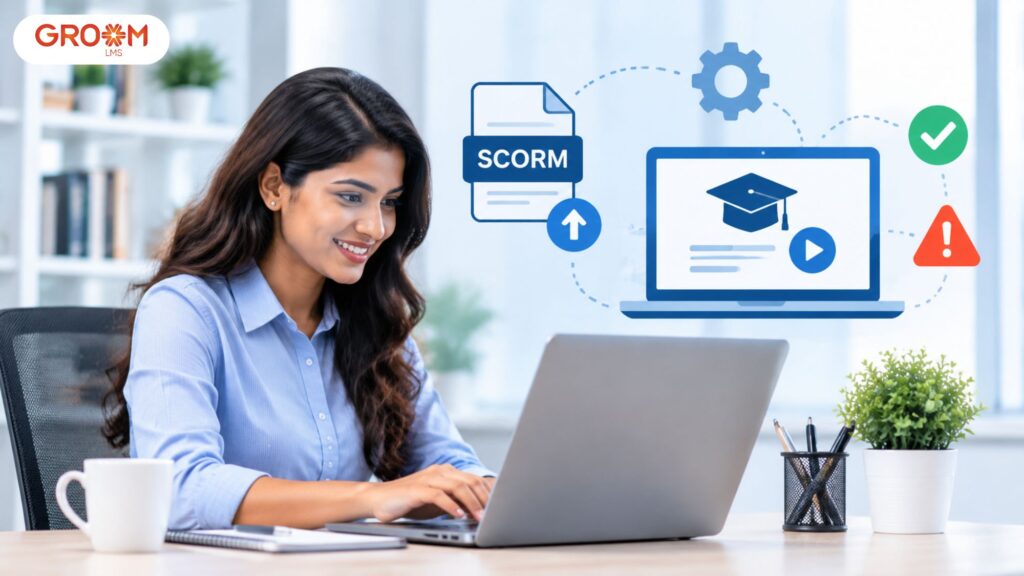

Customer training plays an important role in helping users understand products, explore features, and get maximum value from the services they purchase. However, as a business grows, managing customer onboarding, product education, and ongoing training can become increasingly challenging. Manual processes and disconnected learning tools often create unnecessary work for support and customer success teams. This is why choosing the best LMS for customer training is important. A suitable learning management system helps businesses organise courses, deliver consistent learning experiences, track progress, and support customers without relying heavily on IT teams.
GroomLMS helps organisations simplify customer education through a centralised digital learning environment. Businesses can create product training modules, organise learning paths, conduct assessments, and monitor learner progress from one platform. Its flexible subscription management also allows organisations to adjust their learning environment as requirements change. Whether you are launching a new customer onboarding programme or expanding an existing training initiative, the right LMS can make customer education easier to manage, maintain, and scale.
Why Customer Training Matters for Business Growth?
Customer training helps users understand how to use a product or service correctly. It gives them the knowledge to complete tasks, explore useful features, and solve common problems independently.
For SaaS companies, software providers, and businesses with complex products, customer education is an important part of the customer experience.
Without structured training, customers may struggle with setup, overlook important features, or contact support for basic instructions. These difficulties can affect product adoption and satisfaction.
A well-organised training programme can help businesses:
- Improve product adoption: Guide customers through essential features and workflows.
- Reduce repetitive support requests: Provide tutorials and learning resources for common questions.
- Support customer onboarding: Help new users understand the product from the beginning.
- Maintain consistent information: Give different customer groups access to standardised learning content.
- Strengthen customer relationships: Help users get more value from the products and services they purchase.
Customer training should not end after onboarding. As products change and new features become available, customers need updated information. A learning management system makes it easier to maintain this ongoing education.
What Makes the Best LMS for Customer Training?
The best LMS for customer training should make it simple to launch courses, manage learning content, and support a growing customer base.
It should also allow business teams to handle routine training activities without depending on developers for every small change.
Consider these essential capabilities before choosing a platform.
1. Simple Setup and Deployment
A complicated implementation process can delay customer education. Look for a platform that allows your team to establish a learning environment without lengthy technical work.
Quick deployment helps businesses start building and distributing training programmes sooner.
2. Easy Course Creation and Content Management
Your team should be able to create courses, organise lessons, upload learning resources, and update content when product information changes.
Support for different content formats, such as videos, documents, presentations, and SCORM packages, can make training more flexible.
3. Structured Learning Paths
Different customers may have different levels of experience and product requirements.
A new customer may need introductory training, while an experienced user may want advanced feature guidance.
Custom learning paths help organise courses around customer needs, product knowledge, or specific learning objectives.
4. Assessments and Certifications
Quizzes and assessments help check whether customers understand the information presented in a course.
Certificates can also recognise customers who complete specific learning programmes or demonstrate the required knowledge.
5. Progress Tracking and Reporting
Training teams need visibility into how customers interact with learning content.
Look for reporting capabilities that help monitor course completion, participation, assessment performance, and learning progress.
6. Scalability and Flexible Management
Your customer base may grow from a small group to thousands of users. The LMS should support changing training requirements without making administration unnecessarily difficult.
Consider user management, course reuse, subscription flexibility, and the platform’s documented capacity.
7. Accessible Learning Experiences
Customers may access training from different devices, locations, and time zones.
A convenient learning experience helps users find relevant resources and complete courses without unnecessary scheduling difficulties.
How to Launch Customer Training Without Heavy IT Support
Launching a customer training programme does not need to become a large technical project. With the right platform and preparation, business, product, and customer success teams can manage many routine activities themselves.
Follow these steps to get started.
1. Define Your Customer Training Goals
Start by deciding what customers should learn.
Your goals should connect directly to product usage and customer needs. For example, a software company may want new customers to understand account setup, dashboard navigation, and essential workflows.
Other goals may include:
- Helping customers use advanced features.
- Explaining product updates.
- Teaching common troubleshooting steps.
- Preparing customers for certification.
- Improving knowledge of product policies and processes.
Clear goals help you avoid creating unnecessary courses.
2. Identify Different Customer Groups
Not every customer requires the same training.
Segment your learners according to their product experience, subscription, industry, or role.
For example, a software provider might create separate learning programmes for administrators, everyday users, and technical teams.
This makes course assignments more relevant and prevents beginners from receiving unnecessarily advanced material.
3. Create Short, Practical Learning Modules
Customers usually want answers to specific questions. Long, complicated courses can make it harder to find useful information.
Break training into focused modules.
For example, a product onboarding programme could include:
- Introduction to the product.
- Account setup and navigation.
- Understanding core features.
- Completing common tasks.
- Troubleshooting frequently encountered issues.
Use clear instructions, screenshots, short videos, and practical examples where appropriate.
4. Upload and Organise Your Training Content
Once the content is ready, organise it into courses and learning paths.
Use meaningful course titles and categories so customers can find the right material.
A centralised content library also makes updates easier. When a product feature changes, your team can identify the relevant lesson and revise it instead of recreating the entire programme.
5. Set Up Customer Access and Enrolment
Establish a straightforward process for giving customers access to training.
Decide how learners will be added, how courses will be assigned, and what information they need to access the platform.
User management and role-based permissions can help administrators organise customer groups. Where supported, bulk uploads and automated assignments can reduce repetitive administration.
6. Add Knowledge Checks
Include short assessments after important learning modules.
For example, a software onboarding course could ask customers to identify the correct steps for configuring an account.
These knowledge checks help customers review important information and give training teams additional insight into learning progress.
7. Launch, Monitor, and Improve
Once the programme is ready, introduce it to your customers through appropriate communication channels.
Monitor course participation, completion, assessment results, and customer feedback.
Use this information to identify unclear lessons, missing topics, and areas where customers need additional guidance.
A successful launch is the beginning of an ongoing customer education programme.
How to Scale Customer Training as Your Business Grows
Launching a few courses is relatively straightforward. Maintaining a useful training programme as the customer base expands requires a more organised approach.
The following practices can help your programme grow without creating unnecessary IT dependency.
Reuse and Update Existing Courses
Avoid creating a new course every time a customer group needs similar information.
Build reusable modules for common topics, such as product introductions, account setup, and frequently used features. Update these modules when product workflows or instructions change.
Course reuse saves content development time and helps maintain consistent information.
Create Learning Paths for Different Customer Needs
As your customer base expands, different groups may require specialised training.
Create learning paths for beginners, advanced users, administrators, partners, or distributors. This gives each group a more relevant learning experience.
Automate Routine Activities
Manual enrolment, reminders, and progress updates can become difficult to manage when more customers join.
Where available, use automated assignments, notifications, and reporting features to reduce repetitive work.
Automation should support your team’s workflow, not make it more complicated.
Use Reports to Identify Training Gaps
Review available learning data to understand how customers are using the programme.
Look for incomplete courses, low assessment scores, and lessons where learners frequently need help.
These patterns can highlight where content needs clarification or additional guidance.
Establish a Regular Content Review Process
Product features, pricing, policies, and processes can change. Outdated training materials may confuse customers and reduce confidence.
Assign responsibility for reviewing course content. Set a review schedule and update lessons whenever important product changes occur.
This keeps customer education relevant as the business develops.
How GroomLMS Helps Launch and Scale Customer Training
Managing customer education becomes easier when course creation, learner management, assessments, and reporting are available through one learning environment.
GroomLMS provides a platform designed to support customer training, product onboarding, and ongoing product education.
Its customer training capabilities include role-based learning paths, onboarding programmes, product training modules, multilingual support, gamification, assessments, and quizzes. groomlms.com+1
Here is how GroomLMS can support different stages of customer training.
Quick Deployment Without Complicated Setup
GroomLMS promotes a three-step deployment process designed to help organisations get started without lengthy technical implementation. This can help teams focus on preparing customer learning programmes rather than managing complicated setup tasks. groomlms.com
Centralised Course Management
Teams can create and organise courses using documents, videos, SCORM packages, and interactive media. Course management capabilities also include custom learning paths, course assignments, assessments, and reporting. groomlms.com
This helps businesses maintain customer learning materials in an organised environment.
Customer-Specific Learning Experiences
Different customer groups can follow learning paths relevant to their needs. For example, new users can begin with onboarding, while experienced users can access product tutorials and advanced training.
This makes it easier to structure learning around customer experience and product requirements. Online Learning Management System
Assessments and Knowledge Reinforcement
Quizzes and assessments can help customers check their understanding of product features and processes.
Businesses can also use certification activities to recognise customers who complete relevant learning programmes.
Reporting and Learning Insights
GroomLMS offers reporting and analytics capabilities that help organisations review course completion, learner activity, assessment results, and other training information. These insights can guide improvements to customer education programmes. groomlms.com
Flexible Subscription Management
Organisations can create a GroomLMS instance online and upgrade or downgrade subscriptions as their requirements change.
This flexibility can help businesses adjust their learning environment as customer training needs develop, without making every change a separate technical project.
For SaaS companies, product businesses, and organisations with customer education requirements, GroomLMS provides tools to organise onboarding, product training, and ongoing learning through a centralised platform.
Common Mistakes to Avoid When Choosing an LMS for Customer Training
Even a feature-rich platform may not deliver the expected results if it does not match your training requirements.
Avoid these common mistakes when selecting the best LMS for customer training.
- Choosing based only on price: Compare usability, course management, reporting, support, and scalability alongside subscription costs.
- Ignoring the administrator experience: Your team should be able to manage routine course updates and learner activities without constant technical assistance.
- Creating lengthy courses: Keep lessons focused on practical customer needs.
- Overlooking mobile accessibility: Consider how customers will access training across their devices.
- Failing to update content: Review learning materials whenever product features or processes change.
- Not measuring performance: Use available reports and customer feedback to improve the programme.
The right platform should simplify customer education, not introduce another complicated system to manage.
Conclusion
Customer training helps people understand products, use features confidently, and get more value from the services they purchase. However, launching and maintaining these programmes can become challenging as customer numbers increase.
The best LMS for customer training should make deployment, course management, learner access, assessments, and reporting straightforward. It should also give business teams enough control to manage routine activities without depending heavily on IT support.
Start with clear learning goals, organise customers into relevant groups, and create practical courses. As the programme grows, reuse content, automate routine activities where possible, and review learning data regularly.
GroomLMS supports these requirements through customer learning paths, product training modules, assessments, quizzes, course management, and reporting capabilities. Its flexible subscription management also helps organisations adapt their learning environment as requirements change.
With the right learning platform, customer training can become an organised and ongoing part of customer success.
Launch and Scale Customer Training with GroomLMS
Discover how GroomLMS empowers your organization to streamline training, enhance learner engagement, and deliver impactful learning experiences with an AI-powered LMS built for growth.
Contact Us | Join GroomLMS | Chat on WhatsApp
Frequently Asked Questions (FAQs)
What is customer training?
Customer training is the process of educating customers about a company’s products or services. It helps users understand features, complete tasks, solve common problems, and get more value from their purchases.
How can businesses scale customer training?
Businesses can scale customer training by using reusable learning content, role-based learning paths, automated enrolments, digital assessments, and progress reports through an LMS.
What makes GroomLMS a good choice for customer training?
GroomLMS offers customer training capabilities such as product onboarding, role-based learning paths, self-paced courses, assessments, quizzes, multilingual support, and reporting to help organisations manage customer education.
Can GroomLMS help launch customer training without heavy IT support?
GroomLMS offers a simplified deployment process and course management capabilities that help organisations create, organise, and manage digital training programmes without requiring constant technical assistance.
Can GroomLMS support customer training as a business grows?
Yes. GroomLMS provides course management, learner management, learning paths, assessments, and reporting capabilities. Its flexible subscription options also allow organisations to adjust their plans as training requirements change.