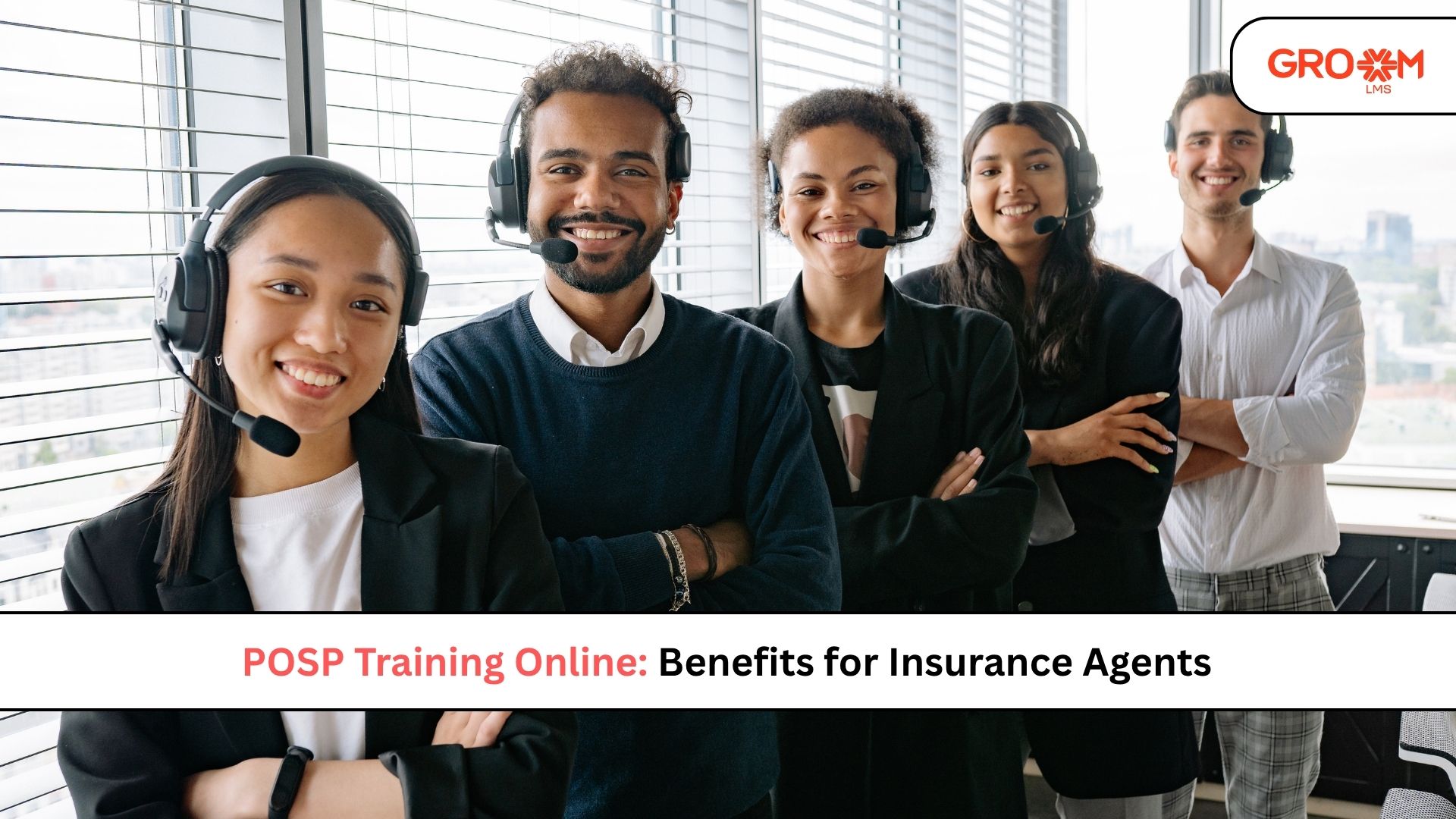
The insurance industry depends on knowledgeable and well-trained agents who can understand products, communicate information clearly, and follow the required processes. However, training a large number of insurance agents can become difficult when learners are spread across different locations or have different schedules. Traditional classroom-based programs may also require considerable coordination, time, and administrative effort.
This is where POSP training online provides a practical alternative. Digital training allows insurance organizations to create structured learning experiences that agents can access through an online platform. Instead of depending entirely on physical sessions, organizations can bring training content, assessments, progress tracking, and learning resources together in one digital environment.
However, delivering online training effectively requires more than simply uploading videos or documents. Organizations need a system that can organize learning, manage users, monitor progress, and support the training journey. An LMS such as GroomLMS can help insurance organizations and L&D teams build and manage these learning experiences while reducing continuous dependence on technical support.
Understanding POSP Training Online
POSP, or Point of Sales Person, training is designed to provide individuals with the knowledge required to perform their insurance-related responsibilities within the applicable regulatory framework. Training plays an important role because agents need to understand insurance concepts, products, processes, and customer interactions before they begin their professional activities.
Traditionally, such training could involve classroom sessions, printed materials, scheduled lectures, and manual records. Although these methods can still have value, they become harder to manage when organizations need to train learners at scale.
POSP training online shifts a significant part of this learning experience to a digital environment. Learners can access structured courses, educational resources, assessments, and other learning activities through an online platform.
The concept is particularly useful because learning no longer needs to depend entirely on a physical location. Instead, organizations can establish a consistent digital learning structure that supports both learners and training administrators.
Why Is Online Training Becoming Important for Insurance Agents?
Insurance businesses often work with distributed agent networks. Agents may operate in different cities, work according to different schedules, or join an organization at different times. Consequently, arranging identical classroom training for everyone can require substantial coordination.
Online learning addresses this challenge by creating a centralized training environment. Once the learning structure is created, organizations can make it available to relevant learners according to their training requirements.
This does not mean that every aspect of training must become completely digital. Rather, online learning provides another method for delivering and managing education. Organizations can combine digital courses, assessments, virtual sessions, and other learning methods to create a more flexible training model.
The key benefits include:
- Easier access for agents in different locations
- Consistent training content for all learners
- Faster onboarding of new agents
- Digital assessments and knowledge checks
- Centralized progress tracking
- Better scalability for growing agent networks
As a result, POSP training online can support a more organized approach to agent development.
Flexibility Makes Learning More Accessible
One of the fundamental advantages of online learning is flexibility. Classroom training generally requires learners to attend a session at a particular time and location. This structure may not always be convenient for insurance agents.
Online training changes this relationship between learning and location. When content is available through an LMS, learners can access the assigned material through the digital platform and follow the defined learning path.
This flexibility can be particularly useful when organizations have agents across different locations. Instead of repeatedly organizing physical sessions, the organization can provide a common digital learning environment.
More importantly, flexibility does not have to mean a lack of structure. A well-designed online course can still guide learners through specific modules, activities, assessments, and completion requirements.
For example, learners may be able to:
- Access training material from different locations
- Complete modules according to their availability
- Revisit difficult topics when required
- Attend virtual instructor-led sessions
- Complete assessments online
Online Training Creates a Standardized Learning Experience
Consistency is another important consideration in insurance training. When different groups receive training through different trainers, locations, or materials, the learning experience can vary.
Digital learning provides organizations with greater control over the core training content. A standardized course can present the same fundamental information to different groups of learners.
For example, an organization could structure a training program around:
- Insurance fundamentals
- Product knowledge
- Customer communication
- Sales processes
- Compliance-related learning
- Knowledge assessments
The exact curriculum will depend on the organization’s requirements and applicable regulations. However, the principle remains the same: a centralized learning system can help organizations create greater consistency.
This is especially valuable when training programs need to be repeated frequently. A standardized digital course can help ensure that every learner receives the same essential information.
POSP Training Can Support Faster Agent Onboarding
Training is closely connected with onboarding. When a new agent joins an organization, the training process needs to be clear enough to help the learner understand what is expected.
A digital learning environment can provide a defined onboarding journey. Instead of relying on multiple emails, documents, and manual instructions, organizations can organize relevant learning resources within a single platform.
A typical onboarding journey may include:
- Introduction to the organization
- Basic insurance concepts
- Product and policy information
- Customer interaction guidelines
- Compliance-related modules
- Knowledge assessments
- Completion records or certifications
The advantage is not simply speed. A structured onboarding process also provides greater visibility. Training teams can understand where learners are within the learning journey and identify areas that need attention.
Assessments Turn Training Into a Measurable Process
Training becomes more meaningful when organizations can evaluate learning outcomes. Simply providing information does not necessarily mean that the learner has understood it.
Online assessments can therefore become an important component of POSP training. Quizzes and knowledge checks can be placed after individual modules or at specific stages of the course.
The purpose of assessment is not only to assign a score. It can also help learners identify areas that require additional attention. At the organizational level, assessment data can provide insights into common learning gaps.
Online assessments can help organizations:
- Check learner understanding
- Identify knowledge gaps
- Reinforce important concepts
- Compare performance across groups
- Improve future training content
This approach allows training teams to think about learning as an ongoing process rather than a one-time activity.
Progress Tracking Improves Training Visibility
Managing a small training group manually may be possible. However, the situation becomes more complicated when an organization has hundreds or thousands of agents.
Training administrators need answers to basic questions:
- Who has started the training?
- Who has completed it?
- Which modules remain incomplete?
- How are learners performing in assessments?
- Which learners may need additional support?
An LMS can bring this information into a centralized environment. Dashboards and reports can provide training teams with a clearer picture of learner activity.
This visibility is valuable because it allows organizations to move away from assumptions. Instead, training decisions can be supported by actual learning data.
For example, if a particular module consistently produces lower assessment scores, the organization can review its content and determine whether learners need additional explanations or practice.
Online Training Supports Scalability
Scalability is one of the strongest reasons organizations consider digital learning platforms.
A classroom-based training model often requires additional coordination as the number of learners increases. More sessions may require more trainers, locations, schedules, and administrative work.
A digital learning platform provides a different model. Once a course has been developed, it can potentially be delivered to additional learners without recreating the entire learning structure each time.
This does not eliminate the need for trainers or support. Instead, it allows organizations to use technology for repetitive and administrative parts of training while allowing training professionals to focus on learning quality and learner support.
For insurance organizations expanding their agent networks, this can make training operations easier to manage.
The scalability benefits may include:
- Training more agents without arranging repeated classroom sessions
- Reducing administrative workload
- Reusing approved learning content
- Managing multiple learner groups
- Tracking progress from one centralized platform
How GroomLMS Can Support Insurance Training
The effectiveness of online training depends heavily on the system used to manage it. An LMS should provide more than basic content hosting. It should help organizations manage the complete learning lifecycle.
GroomLMS provides capabilities for:
- Course authoring
- Online assessments
- Certifications
- Analytics and reports
- Learner dashboards
- Multimedia learning
- Virtual instructor-led training
- Structured learner management
- SCORM and xAPI support
For an insurance organization, these capabilities can support different stages of the training process. Course authoring can be used to structure learning content. Assessments can evaluate knowledge. Dashboards can provide visibility into learner progress. Analytics can help teams understand training performance.
Another important advantage is operational independence. GroomLMS enables organizations to create and manage their learning environment without continuous technical dependency. This can be useful for L&D teams that want greater control over their training programs.
Building an Effective POSP Training Online Program
A successful online training program should begin with learning objectives rather than technology.
First, organizations should identify what learners need to understand. Next, they can organize those requirements into logical modules. Learning content should then explain concepts clearly and use examples where appropriate.
Assessments should be connected to learning objectives. Similarly, progress tracking should help administrators understand whether learners are moving through the program effectively.
A practical online training structure could therefore include:
- Learning objectives to establish clear expectations.
- Structured modules to organize information logically.
- Multimedia content to support different learning preferences.
- Knowledge checks to reinforce important concepts.
- Assessments to evaluate understanding.
- Progress tracking to monitor learner activity.
- Analytics to identify improvement opportunities.
The technology supports the process, but instructional design remains equally important.
Best Practices for Insurance Organizations
Organizations should also focus on the quality of the learner experience. Long, complicated courses can reduce engagement, while unclear navigation can make learning frustrating.
Therefore, training teams should keep content focused and organize information logically. Practical insurance examples can make theoretical concepts easier to understand. Short assessments can also reinforce important information throughout the course.
Some useful practices include:
- Divide lengthy content into shorter modules
- Use simple language and practical examples
- Include videos, presentations, and interactive activities
- Add quizzes after important topics
- Provide clear completion requirements
- Review learner performance regularly
- Update content when policies or processes change
- Collect learner feedback to improve the program
Additionally, training content should be reviewed regularly. Insurance-related information, organizational processes, and compliance requirements can change. Keeping digital courses updated helps ensure that learners receive relevant information.
Ultimately, effective online training combines good instructional design, appropriate technology, relevant content, and continuous evaluation.
The Future of POSP Training
The growth of digital learning is changing how organizations think about professional training. Instead of treating training as a single event, businesses can create continuous learning environments.
For insurance organizations, this approach can be particularly useful because agent development may involve:
- New agent onboarding
- Product learning
- Compliance education
- Refresher training
- Sales skill development
- Customer service training
- Performance improvement programs
An LMS provides the infrastructure needed to manage these different learning activities. Therefore, POSP training online can become part of a broader digital learning strategy rather than functioning as an isolated training program.
As organizations expand, the ability to create, update, monitor, and scale learning programs becomes increasingly important.
Conclusion
POSP training online offers insurance organizations a more flexible and structured approach to agent education. It can make learning more accessible while helping organizations standardize content, conduct assessments, track progress, and manage larger learner groups.
However, successful online training requires more than digital content. Organizations need a reliable learning environment that connects content delivery with learner management, assessment, reporting, and continuous improvement.
GroomLMS provides these capabilities within a scalable LMS environment. By bringing course creation, assessments, analytics, certifications, multimedia learning, and virtual training together, GroomLMS can help insurance organizations simplify their digital training processes.
For organizations looking to modernize POSP training, an LMS can provide the foundation for a more organized, measurable, and scalable learning strategy.
Simplify POSP Training with GroomLMS
Deliver structured, accessible, and scalable online POSP training with GroomLMS. Create courses, manage insurance agents, conduct assessments, track learner progress, and streamline training from one centralized LMS.
Contact Us | Join GroomLMS | Chat on WhatsApp
Frequently Asked Questions (FAQs)
What is POSP training online?
POSP training online is a digital approach to delivering Point of Sales Person training. It can include courses, learning resources, assessments, and progress tracking through an online platform.
What are the benefits of POSP training online?
The major benefits include flexible learning, standardized content, easier onboarding, digital assessments, centralized progress tracking, and better scalability.
Can an LMS be used for insurance agent training?
Yes. An LMS can organize insurance training content, manage learners, conduct assessments, track progress, and provide reports through a centralized learning environment.
How does an LMS help automate training?
An LMS can reduce repetitive administrative work by supporting course assignment, learner tracking, assessments, completion monitoring, notifications, and reporting, depending on its available features.
Can online POSP training support a large agent network?
Yes. A scalable LMS can help organizations deliver structured learning to larger groups while maintaining centralized visibility into learner progress and performance.