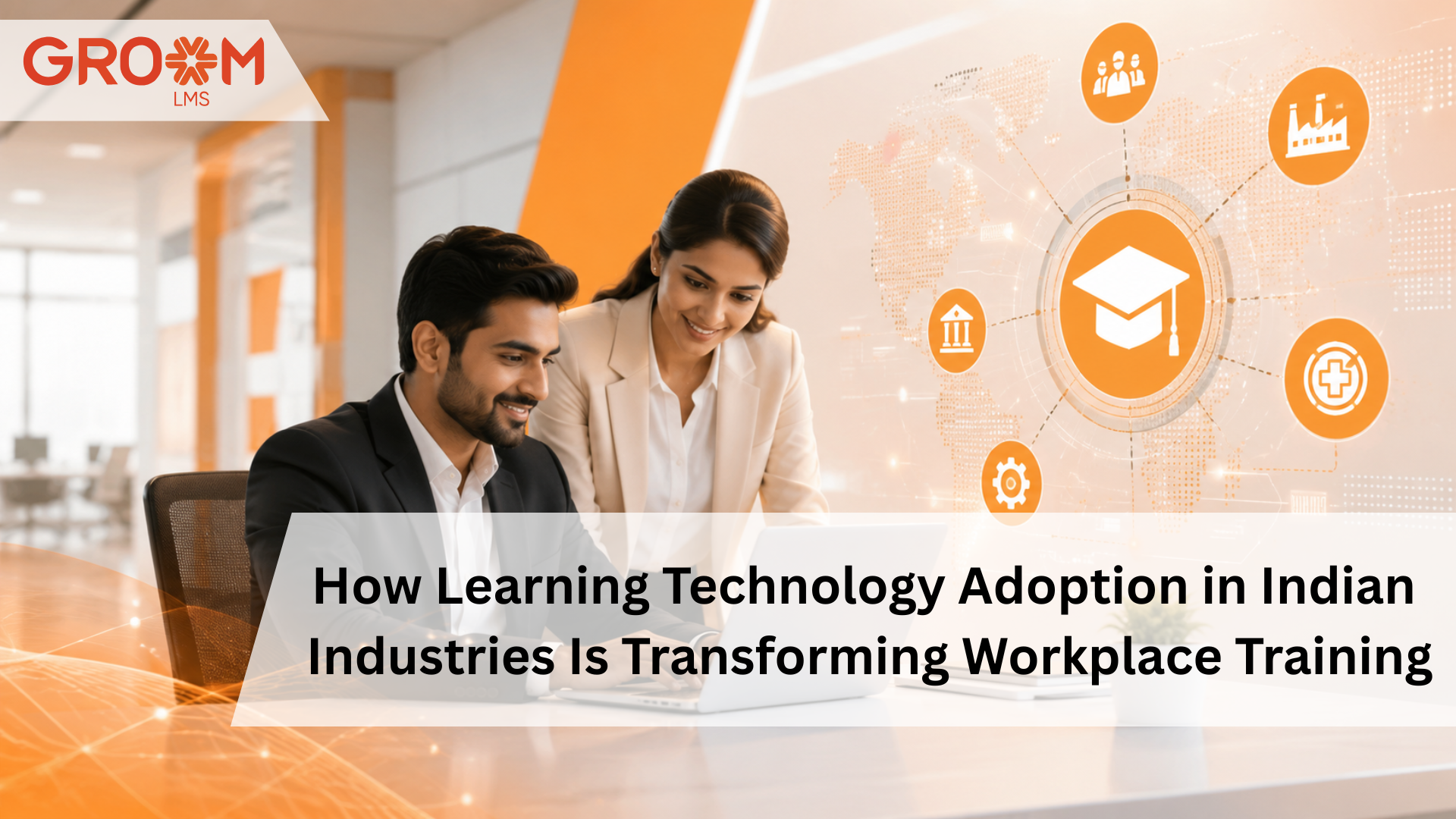
Every industry in India is experiencing rapid digital transformation. However, learning technology adoption in Indian industries is not progressing at the same pace everywhere. While some sectors have embraced digital learning as a strategic advantage, others are still transitioning from traditional classroom training.
This difference often comes down to industry-specific challenges. Manufacturing companies need safety and compliance training. IT organizations require continuous technical upskilling. Healthcare institutions prioritize certification and regulatory learning. Meanwhile, financial organizations focus heavily on compliance and risk management.
Managing these diverse learning requirements becomes difficult when organizations rely on manual processes or complex software that demands constant IT involvement.
This is where GroomLMS helps organizations simplify learning management. With an easy-to-use platform, businesses can independently create, manage, automate, and scale learning programs without technical complexity. Let’s explore how different industries in India are adopting learning technology and what organizations can learn from these trends.
Why Learning Technology Adoption Varies Across Industries
Every industry operates differently. Their workforce, regulations, customer expectations, and business objectives shape how they approach employee learning.
Some common factors include:
- Compliance requirements
- Workforce size
- Geographic distribution
- Skill development needs
- Technology readiness
- Budget availability
As a result, no single learning strategy fits every business.
Manufacturing: Building a Safer and Smarter Workforce
Manufacturing companies have traditionally relied on classroom sessions and on-the-job demonstrations. However, modern production facilities now require continuous learning.
Employees must stay updated on:
- Safety procedures
- Equipment handling
- Quality standards
- Process improvements
- Environmental compliance
Digital learning allows manufacturers to deliver standardized training across multiple plants while tracking employee completion.
Common Challenge
Coordinating training for shift-based workers across different locations can become overwhelming.
Practical Solution
Organizations are increasingly using mobile-friendly LMS platforms to provide learning anytime, reducing operational disruptions.
Information Technology: Continuous Upskilling Is Essential
The IT industry changes rapidly. New programming languages, cybersecurity threats, cloud platforms, and AI technologies emerge regularly.
Employees must constantly learn to remain competitive.
Typical training includes:
- Technical certifications
- Product knowledge
- Agile methodologies
- Leadership development
- Client onboarding
Learning technology has become a business necessity rather than an optional investment.
Example
An IT company launching a new software product can assign role-based learning paths through GroomLMS. Employees complete training before product deployment, ensuring faster adoption.
BFSI: Compliance Drives Learning
Banks, financial institutions, and insurance companies operate under strict regulations.
Training programs often focus on:
- Regulatory compliance
- Risk management
- Customer service
- Fraud prevention
- Data security
Manual tracking creates unnecessary administrative work.
Instead, automated learning platforms help organizations assign mandatory courses, send reminders, and generate compliance reports automatically.
This improves both operational efficiency and audit readiness.
Healthcare: Accuracy Matters Most
Healthcare professionals require continuous education throughout their careers.
Training typically covers:
- Clinical protocols
- Patient safety
- Medical equipment
- Infection control
- Regulatory compliance
Unlike many industries, healthcare training directly affects patient outcomes.
Therefore, organizations increasingly prefer centralized learning platforms that maintain certification records and provide instant access to updated learning materials.
Retail and E-commerce: Fast Training for Large Teams
Retail businesses often experience:
- High employee turnover
- Seasonal hiring
- Distributed store locations
Training new employees quickly becomes essential.
Learning technology helps retailers:
- Standardize onboarding
- Deliver product knowledge
- Train customer service teams
- Monitor learning progress
Employees can complete onboarding before their first working day, improving productivity from the start.
Education Institutions: Blended Learning Is Becoming Standard
Educational institutions were among the earliest adopters of learning technology.
Today, schools, colleges, universities, and training institutes use LMS platforms for:
- Online classrooms
- Assignments
- Assessments
- Certifications
- Student progress tracking
Modern institutions also require analytics that help faculty identify learning gaps more effectively.
Government and Public Sector: Scaling Learning Nationwide
Government organizations often train thousands of employees spread across different regions.
Their learning priorities include:
- Policy updates
- Public service training
- Compliance
- Skill development
- Administrative procedures
Learning technology reduces travel costs while ensuring consistent knowledge delivery across departments.
Common Challenges Across All Industries
Although industries differ, several learning challenges remain surprisingly similar.
Organizations frequently struggle with:
- Complex LMS implementation
- Heavy dependence on IT teams
- Manual learner management
- Limited reporting capabilities
- Difficulty scaling training
- Poor learner engagement
These issues reduce the effectiveness of training programs and increase administrative workload.
What Organizations Need from Modern Learning Technology
Regardless of industry, businesses increasingly look for learning platforms that are simple, scalable, and flexible.
An ideal LMS should provide:
- Quick deployment
- Easy course management
- Automated enrollments
- Assessments and certifications
- Progress tracking
- Learning analytics
- Mobile accessibility
- Secure data management
Most importantly, organizations should be able to manage learning independently without relying on technical experts for everyday tasks.
How GroomLMS Supports Different Industries
Instead of offering a one-size-fits-all approach, GroomLMS adapts to different organizational needs.
Its platform supports businesses by enabling them to:
- Launch learning portals within minutes
- Create structured learning journeys
- Deliver instructor-led and self-paced courses
- Conduct assessments
- Issue certificates automatically
- Monitor learner performance through dashboards
- Scale training programs as the organization grows
Whether an organization belongs to manufacturing, IT, BFSI, healthcare, education, or another sector, GroomLMS simplifies learning administration while improving learner experience.
Because the platform requires minimal technical dependency, HR and L&D teams can focus more on developing people and less on managing systems.
Trends Shaping Learning Technology Adoption in India
Several trends are accelerating digital learning across industries.
AI-Powered Personalized Learning
Organizations increasingly recommend courses based on employee roles, performance, and career goals.
Mobile Learning
Employees now expect training that fits into their daily workflow using smartphones and tablets.
Microlearning
Short learning modules improve knowledge retention while reducing learner fatigue.
Learning Analytics
Businesses increasingly use dashboards to measure training effectiveness and identify skill gaps.
Automation
From enrollment to certification, automation reduces repetitive administrative work and improves learner consistency.
Organizations adopting these trends gain a competitive advantage through faster skill development and improved workforce readiness.
Best Practices for Successful Learning Technology Adoption
To maximize learning outcomes, organizations should:
- Define clear learning objectives.
- Choose technology that scales easily.
- Keep learning content engaging.
- Use assessments regularly.
- Monitor learner progress.
- Gather employee feedback.
- Improve courses continuously.
These practices help organizations build a sustainable learning culture rather than treating training as a one-time activity.
Conclusion
Learning technology adoption in Indian industries continues to grow, but every sector follows its own journey based on business goals, compliance requirements, and workforce needs. Organizations that invest in flexible and user-friendly learning platforms are better prepared to develop employee skills, improve productivity, and respond to changing market demands.
GroomLMS simplifies this journey by enabling organizations to independently create, manage, automate, and scale learning programs without ongoing technical support. Whether you’re training hundreds or thousands of learners, adopting the right learning technology today can create lasting value for your workforce and your business.
CTA – Request a Demo
Explore GroomLMS Today
Whether you’re training employees, partners, or customers, GroomLMS helps you deliver learning that drives results.
Request a demo, sign up to experience the platform, or contact us to find the right solution for your organization.
Frequently Asked Questions (FAQs)
What is learning technology adoption in Indian industries?
Learning technology adoption refers to how organizations across sectors like manufacturing, IT, BFSI, healthcare, and education use digital platforms such as LMS solutions to deliver, manage, and monitor employee learning.
Why do different industries adopt learning technology differently?
Each industry has unique compliance requirements, workforce structures, operational challenges, and skill development needs, leading to different approaches to digital learning.
How does GroomLMS help organizations manage employee training?
GroomLMS enables organizations to create courses, automate enrollments, track learner progress, conduct assessments, issue certificates, and manage training independently without extensive IT support.
Which industries benefit the most from an LMS?
Manufacturing, IT, BFSI, healthcare, education, retail, government, and professional services all benefit from scalable learning management systems for workforce development.
Why is scalable learning important for growing businesses?
Scalable learning allows organizations to train larger workforces efficiently, maintain consistent learning experiences, reduce administrative effort, and support continuous employee development without increasing operational complexity.