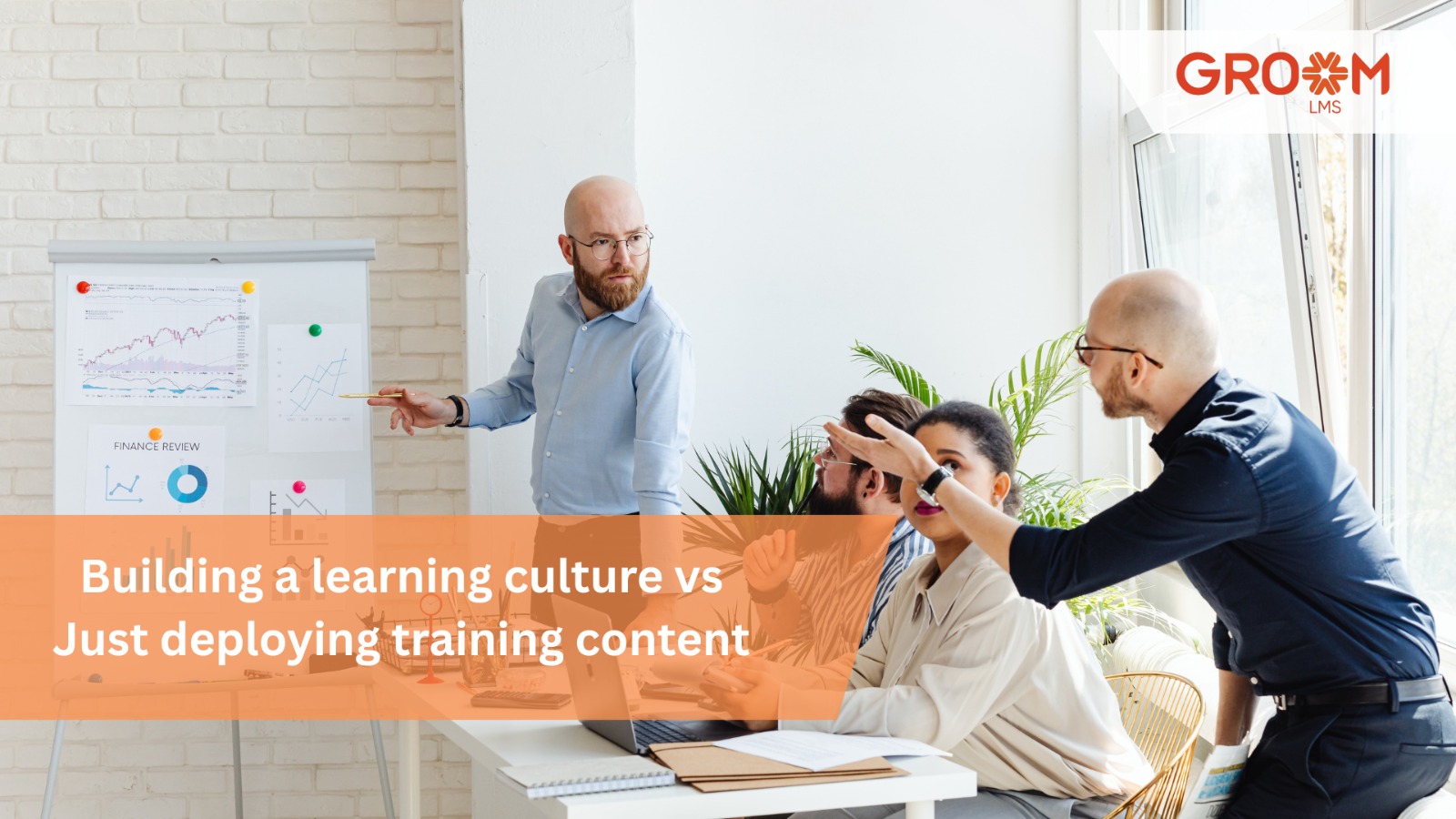
Many organizations invest heavily in employee training programs. They create courses, schedule sessions, and provide learning materials. However, training completion does not always lead to better skills, improved performance, or long-term growth.
The real challenge is not delivering training. It is creating an environment where employees continuously learn, improve, and apply knowledge in their daily work.
This is where building a learning culture becomes important.
A strong learning culture encourages employees to see learning as an ongoing process rather than a one-time activity. Instead of only completing mandatory courses, employees actively develop new skills, explore knowledge, and improve their performance.
However, many businesses struggle to build this culture because their training systems are difficult to manage, scale, and personalize.
Modern LMS platforms like GroomLMS help organizations move beyond simple course delivery. They provide the tools needed to create engaging learning experiences, automate training workflows, track progress, and support continuous employee development.
Training Content Alone Does Not Create a Learning Culture
Training content is only one part of the learning journey.
A company can have hundreds of courses available, but employees may not engage with them unless the learning environment supports growth.
Traditional training approaches often focus on:
- Completing required courses
- Checking compliance boxes
- Delivering information once
- Measuring attendance instead of improvement
Although these activities are necessary, they do not always create meaningful learning experiences.
A learning culture focuses on:
- Continuous skill development
- Knowledge sharing
- Employee growth
- Practical application of learning
- Feedback and improvement
For example, an employee completing a leadership course once may not automatically become a better leader. However, a workplace that encourages regular learning, practice, mentoring, and skill-building creates stronger results.
What Does Building a Learning Culture Actually Mean?
Building a learning culture means making learning a natural part of everyday work.
Employees should have easy access to the right resources at the right time. Learning should not feel like an extra task. Instead, it should become part of professional development.
Organizations with strong learning cultures usually focus on:
1. Making Learning Accessible
Employees need flexible learning options that fit their schedules.
Modern teams often work remotely, across different locations, or with different responsibilities. Therefore, businesses need learning solutions that allow employees to access training anytime.
A scalable LMS platform helps organizations provide:
- Online courses
- Mobile-friendly learning
- Digital resources
- Self-paced training
- Assessments and certifications
2. Connecting Learning With Business Goals
Training becomes more effective when it supports real business objectives.
Instead of creating random courses, organizations should design learning paths based on:
- Employee roles
- Required skills
- Performance gaps
- Future business needs
For example, a sales team may need product knowledge training, while managers may need leadership development programs.
A structured LMS helps businesses organize learning journeys according to different employee requirements.
Why Organizations Struggle to Scale Training Programs
As businesses grow, managing training becomes more complicated.
Common challenges include:
- Too much manual administration
- Difficulty tracking employee progress
- Lack of personalized learning paths
- Limited reporting visibility
- Dependence on technical teams
Many organizations start with simple training methods but eventually need a more efficient approach.
Without the right system, L&D teams spend more time managing training operations instead of improving learning experiences.
How an LMS Helps Build a Strong Learning Culture
A Learning Management System is not just a place to upload courses. A modern LMS acts as a complete learning ecosystem.
With GroomLMS, organizations can simplify learning management through:
Centralized Learning Management
Businesses can manage courses, assessments, certifications, and employee learning activities from one platform.
This creates consistency and reduces administrative complexity.
Automated Training Workflows
Automation helps organizations save time by managing repetitive tasks.
Examples include:
- Course assignments
- Employee notifications
- Completion tracking
- Certification management
As a result, L&D teams can focus more on strategy and less on manual processes.
Better Learning Engagement
Employees engage more when learning feels personalized and relevant.
Organizations can create:
- Role-based learning paths
- Interactive courses
- Assessments
- Progress tracking
This approach encourages employees to actively participate in their development.
Moving From Course Completion to Continuous Development
One major difference between traditional training and a learning culture is the focus.
Traditional training asks:
“Did employees complete the course?”
A learning culture asks:
“Did employees gain useful knowledge and improve their skills?”
This shift changes how organizations measure success.
Instead of focusing only on completion rates, businesses can evaluate:
- Skill improvement
- Employee confidence
- Performance changes
- Learning engagement
An LMS platform supports this transition by providing analytics and insights into learning behavior.
Practical Steps to Build a Learning Culture
Organizations can start developing a learning culture by following these steps:
1. Understand Employee Learning Needs
Identify skill gaps and understand what employees need to perform better.
2. Create Structured Learning Paths
Organize training programs based on roles, departments, and career goals.
3. Encourage Continuous Learning
Promote learning beyond mandatory training requirements.
4. Use Technology to Simplify Management
A reliable LMS reduces complexity and makes learning easier to manage.
5. Measure Learning Impact
Track progress and improve training programs based on data.
Why GroomLMS Supports Modern Learning Strategies
GroomLMS helps organizations create a smoother learning experience by combining flexibility, automation, and scalability.
With GroomLMS, businesses can:
- Launch learning programs quickly
- Manage employee training independently
- Create assessments and certifications
- Track learner progress
- Scale training as the organization grows
The platform supports businesses that want to move from basic training delivery toward a complete digital learning ecosystem.
A successful learning culture is not created by adding more courses. It is created by making learning accessible, engaging, and continuous.
Conclusion
Building a learning culture requires more than simply deploying training content. Organizations need systems that encourage continuous development, employee engagement, and measurable learning outcomes.
A modern LMS platform helps businesses simplify training management while creating better learning experiences.
With GroomLMS, organizations can independently create, automate, and scale learning programs without unnecessary complexity. By focusing on continuous improvement instead of one-time training completion, businesses can build stronger teams and support long-term growth.
CTA – Request a Demo
Explore GroomLMS Today
Whether you’re training employees, partners, or customers, GroomLMS helps you deliver learning that drives results.
Request a demo, sign up to experience the platform, or contact us to find the right solution for your organization.
Frequently Asked Questions(FAQs)
What is the difference between training content and a learning culture?
Training content provides information, while a learning culture encourages continuous development, skill improvement, and knowledge sharing across an organization.
How can an LMS help build a learning culture?
An LMS helps organizations create structured learning paths, automate training tasks, track progress, and provide employees with easy access to learning resources.
Why is employee learning important for businesses?
Continuous employee learning improves skills, supports career growth, increases engagement, and helps organizations adapt to changing business needs.
Can GroomLMS support different types of training programs?
Yes. GroomLMS can support employee training, compliance programs, assessments, certifications, and customized digital learning solutions.
Is an LMS useful for growing businesses?
Yes. A scalable LMS helps growing businesses manage training efficiently while reducing manual work and improving learning accessibility.