Learning and development programs are essential for keeping employees and students up to date, but launching and managing these programs can often feel like a complex juggling act. Between multiple software systems, constant IT support, and the need to keep learners engaged, training programs can become overwhelming and resource-intensive.
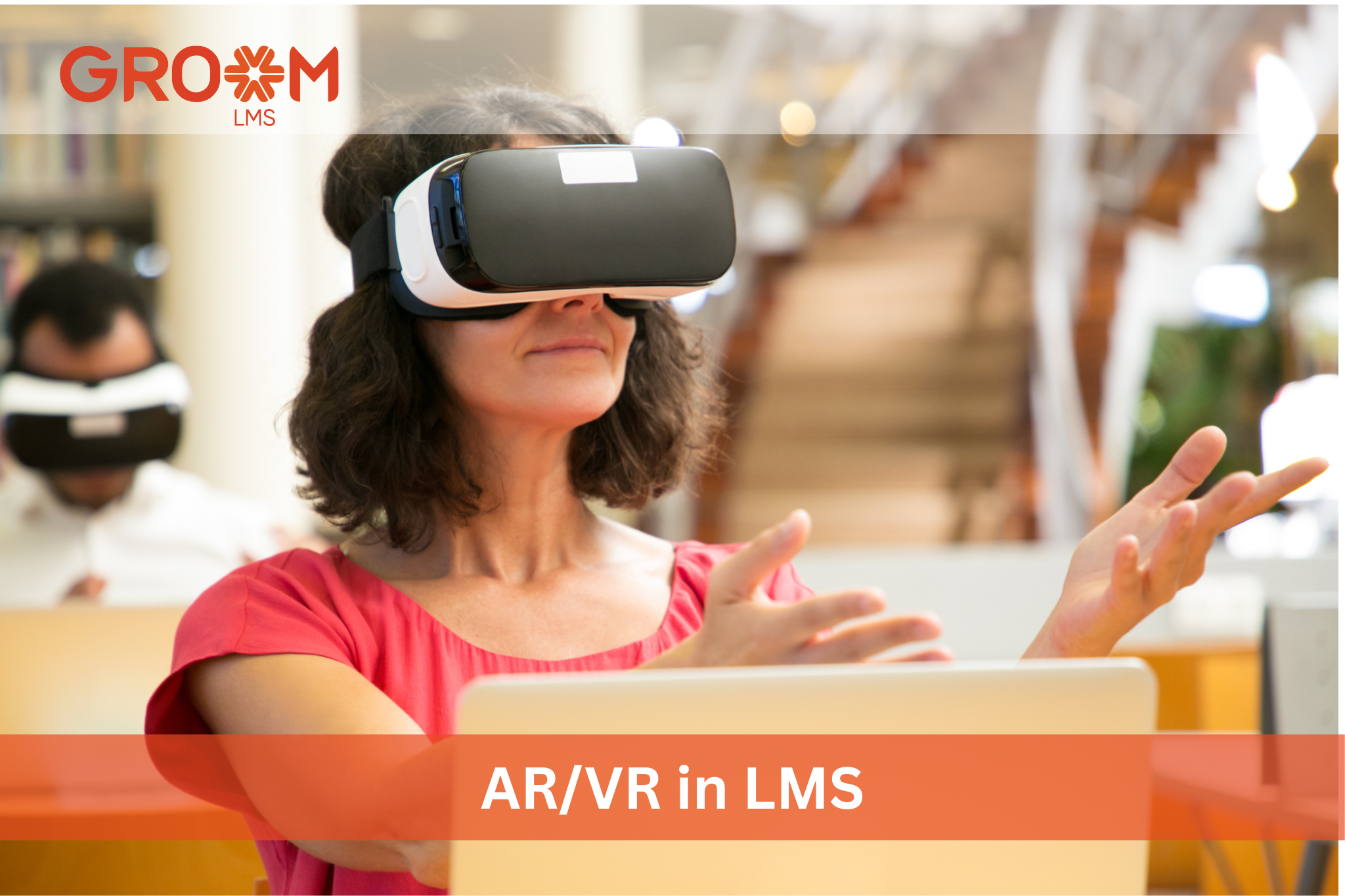
This is where Augmented Reality (AR) and Virtual Reality (VR) in LMS (Learning Management Systems) come in. By creating immersive, interactive learning experiences, AR/VR in LMS transforms training from a routine task into an engaging, hands-on experience. Instead of relying on static slides or long videos, learners can explore realistic simulations, practice complex skills safely, and retain knowledge more effectively. With platforms like GroomLMS, organizations—from corporate L&D teams to educational institutions—can launch and manage these programs independently, without constant technical support.
In this article, we’ll explore how AR/VR in LMS is changing the way we learn, why it matters for different audiences, and practical strategies for leveraging immersive technology in training programs.
Why Traditional Training Often Falls Short
Even the best training content can struggle to make an impact if the delivery isn’t engaging or accessible. Common challenges include:
- Complex Systems: Many organizations use multiple platforms for training, making it difficult to manage content, track progress, and scale programs.
- Low Engagement: Static slides, long videos, or text-heavy modules often fail to capture attention, especially for hands-on skills.
- Resource-Heavy Implementation: Setting up training programs typically requires IT support, extensive coordination, and ongoing maintenance.
- Limited Retention: Learners often forget information when they can’t practice skills in real-life or simulated scenarios.
For corporate L&D teams, SMEs, startups, and educational institutions, these challenges can slow down employee development, reduce productivity, and limit ROI on training initiatives.
How AR/VR in LMS Transforms Learning Experiences
AR and VR bring learning to life by adding a new dimension to how learners interact with content. Here’s how it works:
- Immersive Simulations: Learners can practice procedures, operate machinery, or explore virtual environments without real-world risks.
- Hands-On Learning: Instead of passively consuming content, users actively engage, which improves skill retention and understanding.
- Safe Practice: High-stakes tasks—like medical procedures or industrial operations—can be practiced repeatedly in a controlled, virtual environment.
- Interactive Storytelling: AR/VR allows educators and trainers to create scenarios that mirror real-life challenges, making learning both relevant and memorable.
For example, a healthcare training module could allow students to perform virtual surgeries before ever entering a real operating room. Similarly, a manufacturing company could simulate equipment operation for new employees, ensuring they gain practical experience without the risk of accidents.
Practical Tips for Implementing AR/VR in Your LMS
Integrating AR/VR in LMS might seem daunting, but it can be streamlined with the right approach. Here are some practical strategies:
- Start Small: Begin with pilot programs for high-impact skills or departments before scaling across the organization.
- Focus on Interactivity: Design modules that require learners to actively participate, make decisions, or solve problems.
- Leverage Analytics: Track engagement, completion rates, and skill improvement to measure effectiveness.
- Customize Learning Paths: Tailor experiences for different roles, skill levels, or learning objectives.
- Choose the Right Platform: Use a flexible LMS that supports AR/VR content, simplifies content management, and allows independent setup and scaling.
Platforms like GroomLMS make this process much easier by providing a fully autonomous system where teams can launch immersive learning modules in minutes, manage progress, and upgrade or scale as needed.
Who Benefits Most from AR/VR in LMS
AR/VR in LMS is valuable for a wide range of learners and organizations. Here’s a closer look:
- Corporate L&D Teams: Can train employees in practical skills, compliance, and soft skills with interactive simulations.
- Small and Medium Enterprises (SMEs) & Startups: Gain access to cost-effective, scalable training without heavy IT involvement.
- Educational Institutions and EdTech Companies: Enhance classroom and online learning with immersive educational modules.
- Professional Learners and High-Net-Worth Individuals: Can engage in upskilling, certification programs, or executive training in a flexible, hands-on environment.
Across all these groups, AR/VR in LMS helps learners retain more knowledge, practice skills safely, and stay engaged in the training journey.
Overcoming Common Barriers to AR/VR Adoption
Despite its advantages, some organizations hesitate to adopt AR/VR. Common concerns include cost, technical complexity, and content creation. Here’s how to address them:
- Cost: Start with modular programs and scale gradually. Cloud-based LMS platforms often eliminate the need for expensive hardware or software investments.
- Technical Complexity: Choose an LMS that supports easy AR/VR integration and self-managed deployment.
- Content Development: Utilize pre-built simulations or work with e-learning developers to create engaging, scenario-based modules.
By planning strategically and leveraging modern LMS platforms, these barriers can be minimized, ensuring a smooth adoption process.
Measuring the Impact of AR/VR in LMS
The success of immersive learning programs depends on measurable outcomes. Consider these metrics:
- Completion Rates: Track how many learners finish courses compared to traditional modules.
- Knowledge Retention: Use assessments before and after AR/VR training to measure learning gains.
- Skill Improvement: Evaluate practical skills through simulations or real-world performance post-training.
- Learner Engagement: Monitor interaction time, participation in scenarios, and feedback ratings.
Data-driven insights allow L&D teams to continuously improve training programs, justify investments, and demonstrate tangible results to leadership.
Bringing It All Together
AR/VR in LMS is no longer a futuristic concept—it’s transforming the way organizations and educational institutions deliver learning. By providing immersive, interactive, and practical experiences, AR/VR enables learners to gain skills faster, retain knowledge longer, and engage more deeply.
With a platform like GroomLMS, implementing AR/VR becomes simpler and more accessible. Teams can independently launch training programs, scale content, and track results—all without relying on constant IT support. Whether it’s corporate upskilling, vocational training, or advanced educational programs, immersive learning opens the door to more effective and engaging experiences.
Investing in AR/VR-enabled LMS tools isn’t just about technology—it’s about empowering learners to reach their full potential. Explore the possibilities, experiment with simulations, and watch how interactive learning can transform your organization.