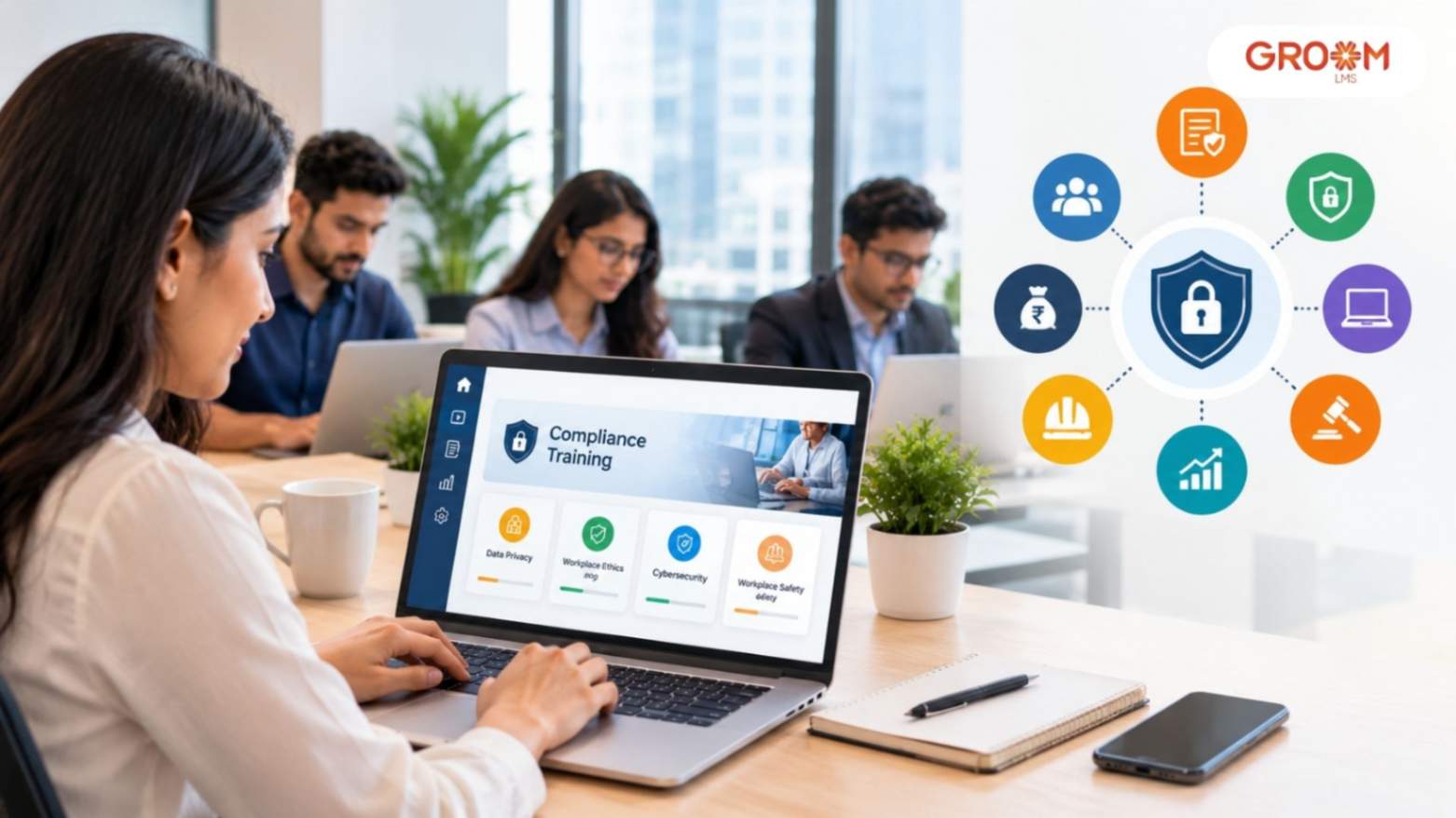
Corporate compliance is an important part of responsible business operations. Organizations need employees to understand internal policies, industry standards, ethical responsibilities, data protection practices, workplace regulations, and other requirements relevant to their roles. As businesses expand across locations and adopt digital workflows, maintaining consistent compliance awareness across the workforce can become increasingly challenging.
Traditional compliance training often depends on classroom sessions, presentations, printed resources, and manual records. While these methods can support learning, they may become difficult to manage when organizations have large or geographically distributed teams. Online compliance courses for corporates provide a more flexible approach by allowing businesses to deliver structured digital learning, assess employee understanding, and monitor training progress through centralized platforms.
For organizations looking to modernize their compliance learning strategy, GroomLMS provides a centralized environment for delivering and managing corporate training. With capabilities such as course management, assessments, certifications, analytics, learning paths, and learner tracking, GroomLMS can help organizations build a more structured and measurable approach to compliance education.
What Are Online Compliance Courses for Corporates?
Online compliance courses for corporates are digital training programs designed to educate employees about workplace policies, regulatory responsibilities, ethical standards, risk management, and industry-specific compliance requirements.
These courses can be delivered through an LMS and structured according to employee roles, departments, business functions, or specific compliance requirements.
Common corporate compliance topics include:
- Data privacy and protection
- Cybersecurity awareness
- Workplace ethics
- Anti-bribery and anti-corruption
- Anti-money laundering
- Workplace safety
- Harassment prevention
- Financial compliance
- Information security
- Regulatory awareness
The purpose of these courses is not simply to communicate rules. Effective compliance learning should help employees understand how policies affect their daily responsibilities and how they should respond when they encounter potential compliance risks.
Why Do Corporates Need Online Compliance Courses?
As organizations become more digitally connected, employees interact with sensitive information, customers, financial systems, and business processes every day. A single misunderstanding can create unnecessary operational, financial, reputational, or compliance risks.
Online compliance courses can help organizations create a consistent learning structure.
1. Improve Employee Awareness
Employees need to understand the policies and standards relevant to their work. Digital compliance courses can provide structured information and practical examples that improve awareness.
2. Standardize Training
Organizations with multiple offices or departments can use centralized courses to provide a consistent learning experience across teams.
3. Simplify Training Administration
Digital platforms can reduce the need for manual tracking by allowing training teams to manage assignments, completion, assessments, and certifications from one environment.
4. Support Continuous Learning
Compliance requirements can change, and employees may need refresher learning. Online courses make it easier to provide updates and recurring training.
5. Scale Corporate Training
As organizations grow, digital compliance programs can be expanded across larger workforces without relying entirely on repeated classroom sessions.
“A strong compliance culture begins when employees understand not only what the rules are, but how those rules influence everyday decisions.”
Common Types of Online Corporate Compliance Courses
The exact courses an organization needs depend on its industry, workforce, policies, and applicable requirements. However, several areas are common across corporate environments.
Data Privacy Compliance
Employees who handle customer, employee, or business information need to understand responsible data collection, access, storage, sharing, and protection practices.
Cybersecurity Awareness
Cybersecurity training can help employees recognize phishing attempts, social engineering, unsafe digital practices, unauthorized access risks, and other common threats.
Workplace Ethics and Conduct
Ethics training can cover professional conduct, conflicts of interest, responsible decision-making, organizational values, and appropriate workplace behavior.
Anti-Bribery and Anti-Corruption
Employees can learn how to recognize inappropriate payments, gifts, conflicts, or business practices that may create compliance concerns.
Financial Compliance
Finance teams and other relevant employees may require training covering financial controls, fraud awareness, responsible financial practices, and regulatory responsibilities.
Workplace Safety
Safety courses can educate employees about workplace hazards, emergency procedures, incident reporting, and safe working practices.
Harassment Prevention
These courses can help employees understand expected workplace conduct, inappropriate behavior, reporting processes, and organizational policies.
Challenges of Traditional Corporate Compliance Training
Traditional training can be valuable, particularly for complex subjects that require direct discussion. However, organizations may encounter challenges when relying entirely on classroom-based approaches.
Scheduling and Coordination
Organizing training sessions for employees across departments, shifts, or locations can require considerable coordination.
Manual Tracking
Maintaining attendance sheets, completion records, assessment results, and certificates manually can increase administrative workload.
Inconsistent Delivery
Different trainers may explain the same compliance topic differently, potentially creating variations in the learning experience.
Limited Flexibility
Employees who cannot attend scheduled sessions may need separate arrangements to complete their training.
Difficulties With Scale
Repeated classroom sessions can become resource-intensive when organizations onboard large numbers of employees or operate across multiple locations.
Online learning addresses many of these challenges by centralizing course delivery and training administration.
How Online Compliance Courses Work
The process begins with identifying the compliance requirements relevant to the organization and its employees. Courses can then be developed or selected according to specific roles and learning objectives.
Employees complete their assigned modules through the online platform. Assessments can measure understanding, while certifications can document course completion where appropriate.
Training teams can then monitor progress and identify employees who have not completed their assigned courses.
For example, all employees may receive data privacy and cybersecurity training, while finance teams receive additional financial compliance modules and managers receive specialized ethics or leadership training.
How to Design Effective Online Compliance Courses
Simply converting a classroom presentation into a digital format does not guarantee effective learning. Corporate compliance courses should be designed around relevance, engagement, and practical application.
Use Realistic Workplace Scenarios
Employees should be given opportunities to understand how compliance principles apply to actual workplace situations.
A course on data privacy, for example, could present a scenario involving an employee receiving a request to share customer information and ask the learner to identify the appropriate action.
Make Training Role-Based
Different employees encounter different risks. Role-based learning can help ensure that employees receive information relevant to their responsibilities.
Keep Content Clear
Compliance topics can involve complex terminology. Using clear and accessible language can make important concepts easier to understand.
Include Interactive Elements
Videos, knowledge checks, quizzes, scenarios, and interactive activities can make digital compliance courses more engaging.
Use Assessments
Assessments can help determine whether employees understand the training instead of measuring completion alone.
Update Content Regularly
Training should be reviewed when organizational policies, technologies, processes, or applicable requirements change.
Benefits of Online Compliance Courses for Corporates
A well-designed online compliance program can provide several practical benefits.
Consistent Learning
Centralized courses allow organizations to provide standardized training across teams and locations.
Flexible Access
Employees can complete digital training through the organization’s approved learning environment without requiring everyone to attend the same classroom session.
Easier Tracking
Training managers can monitor course assignments, completion, assessment performance, and certifications.
Reduced Administrative Effort
Automated assignments, reminders, tracking, and reporting can reduce repetitive manual work.
Better Learner Engagement
Interactive digital content can make complex compliance concepts easier to understand and remember.
Scalable Training
Online learning can support workforce expansion and geographically distributed teams.
Improved Visibility
Analytics and reports can provide HR, L&D, and compliance teams with greater visibility into training activity and outstanding requirements.
Role of an LMS in Corporate Compliance Training
A Learning Management System can serve as the central platform for organizing corporate compliance education.
An LMS allows organizations to manage courses, assign learning paths, conduct assessments, issue certificates, monitor progress, and generate reports.
Role-based learning paths can help organizations organize training according to employee responsibilities. For example, new employees may receive an introductory compliance program, while managers receive additional modules covering ethics, leadership responsibilities, and risk awareness.
An LMS can also support recurring compliance education. Refresher courses can be assigned periodically, while reports can help identify employees who have outstanding training requirements.
Centralized reporting is particularly useful for organizations managing large workforces because it provides a clearer view of learning activity without relying entirely on disconnected spreadsheets.
How to Measure Compliance Training Effectiveness
Completion rates are useful, but they do not provide a complete picture of training effectiveness.
Organizations can evaluate:
Course Completion: How many employees completed their assigned courses?
Assessment Performance: Are employees demonstrating an understanding of key compliance concepts?
Knowledge Gaps: Which topics generate the most incorrect responses?
Learner Engagement: Are employees actively participating in learning activities?
Training Feedback: Do employees find the courses relevant, clear, and practical?
Refresher Performance: Do employees continue to demonstrate understanding during subsequent training?
Combining these measures can help organizations identify where training is working and where additional learning may be required.
Best Practices for Online Corporate Compliance Training
Organizations can strengthen their compliance learning strategy by following several practices:
- Identify training requirements by role and department.
- Use practical examples instead of relying only on theoretical explanations.
- Keep compliance content clear and focused.
- Use interactive learning activities where appropriate.
- Include assessments and knowledge checks.
- Create role-based learning paths.
- Track completion through a centralized LMS.
- Provide refresher training when required.
- Review and update courses regularly.
- Use analytics to identify knowledge gaps and training trends.
The goal should be to make compliance learning part of an ongoing employee development strategy rather than a once-a-year checkbox exercise.
How GroomLMS Supports Online Compliance Courses for Corporates
GroomLMS provides organizations with a centralized learning environment for managing corporate training programs.
Its LMS capabilities can support course management, multimedia learning, assessments, quizzes, certificates, learning paths, learner tracking, analytics, and reporting.
Organizations can use these capabilities to build different compliance learning experiences for different employee groups. For example, a company can assign general workplace compliance training to all employees while providing specialized courses to finance, HR, IT, sales, or management teams.
GroomLMS can also help training teams monitor employee progress and maintain centralized learning records. This reduces dependence on disconnected tracking processes and provides greater visibility into training activity.
For organizations managing multiple compliance requirements, bringing different courses into one learning environment can make corporate learning easier to organize and scale.
The objective is to create compliance learning that is structured, accessible, measurable, and relevant to the modern workforce.
The Future of Online Compliance Courses for Corporates
Corporate compliance training is moving toward continuous, personalized, and more interactive learning experiences.
Microlearning can help employees review specific topics in shorter sessions, while scenario-based learning can provide opportunities to practice compliance-related decisions. Analytics can help organizations identify knowledge gaps and provide targeted learning.
AI-supported learning, interactive assessments, simulations, and mobile-friendly content may further support personalized corporate training experiences.
The larger shift is from one-time compliance courses toward continuous awareness. Instead of treating compliance as an annual requirement, organizations can integrate learning into onboarding, professional development, refresher training, and everyday workplace practices.
Conclusion
Online compliance courses for corporates provide businesses with a practical way to deliver consistent employee education while improving training accessibility, tracking, and scalability.
From data privacy and cybersecurity to workplace ethics, financial compliance, safety, and regulatory awareness, digital courses can help employees understand the responsibilities associated with their roles.
An LMS such as GroomLMS can support this process by bringing course delivery, learning paths, assessments, certifications, analytics, and reporting into a centralized environment.
Ultimately, effective corporate compliance training is not simply about completing courses. It is about developing employee awareness and helping people apply organizational policies and compliance principles to real workplace situations.
Build a Smarter Corporate Compliance Learning Strategy
Make compliance learning more structured, engaging, measurable, and scalable with GroomLMS.
Contact Us | Join GroomLMS | Chat on WhatsApp
Frequently Asked Questions (FAQs)
What are online compliance courses for corporates?
Online compliance courses for corporates are digital training programs that educate employees about workplace policies, regulatory responsibilities, ethical standards, data protection, safety, and other compliance requirements.
What topics can corporate compliance courses cover?
Courses can cover data privacy, cybersecurity, workplace ethics, anti-bribery, anti-money laundering, financial compliance, workplace safety, harassment prevention, and industry-specific requirements.
Why should corporates use online compliance training?
Online compliance training can help organizations deliver consistent learning, simplify administration, track employee progress, support refresher training, and scale learning across different teams and locations.
Can online compliance courses be customized for different roles?
Yes. Organizations can create role-based courses or learning paths so employees receive training relevant to their responsibilities and the risks associated with their roles.
How does an LMS help manage corporate compliance courses?
An LMS can centralize course delivery, assignments, assessments, certifications, learner tracking, analytics, and reporting, making compliance training easier to manage.